
12 Known Complication or Medical Negligence The Legal Test Every Doctor Should Know

Known Complication or Medical Negligence? The Legal Test Every Doctor Should Know

Executive Summary: A known or accepted complication crosses into negligence only when a four-link chain is established: duty, the applicable standard of care, a departure from that standard, and causation of the harm. The Supreme Court in Jacob Mathew v. State of Punjab adopted the Bolam standard — conduct consistent with a responsible body of medical opinion is not negligent even if the outcome is poor — while Kusum Sharma v. Batra Hospital requires courts to distinguish a genuine error of judgment or accepted complication from an actionable breach. Where the facts themselves point unmistakably to a lapse, such as a retained surgical instrument, courts may instead apply res ipsa loquitur, as in Achutrao Haribhau Khodwa v. State of Maharashtra, and presume negligence without first requiring the patient to prove the standard through expert testimony.

Understand It in 60 Seconds

Adverse Medical Outcome Occurs
                    │
                    ▼
STEP 1 — DUTY OF CARE
Was a Doctor–Patient Relationship Established?
                    │
          ┌─────────┴─────────┐
          │                   │
         No                  Yes
          │                   │
          ▼                   ▼
      No Legal Duty       Proceed to
      Claim Fails         Standard of Care
                              │
                              ▼
STEP 2 — STANDARD OF CARE
What Would a Reasonably Competent
Practitioner Have Done?
(Bolam Principle as Applied in Jacob Mathew)
                              │
                              ▼
Does the Event Speak for Itself?
(Res Ipsa Loquitur)
Examples:
• Retained Surgical Instrument
• Wrong-Site Surgery
• Similar Obvious Errors
                              │
                 ┌────────────┴────────────┐
                 │                         │
                Yes                        No
                 │                         │
                 ▼                         ▼
Presumption of Negligence        Establish Standard
May Arise                        Through Expert Evidence
(Achutrao Khodwa)                and Accepted Medical Practice
Burden Shifts to Doctor                  │
                 └────────────┬──────────┘
                              ▼
STEP 3 — DEPARTURE FROM
THE STANDARD OF CARE
Did the Doctor's Conduct
Fall Below the Accepted Standard?
                              │
                 ┌────────────┴────────────┐
                 │                         │
                No                        Yes
                 │                         │
                 ▼                         ▼
Known Complication,              Breach of Standard
Accepted Risk or                 of Care Established
Error of Judgment
(Kusum Sharma)                           │
                              ▼
STEP 4 — CAUSATION
Did the Breach Actually Cause
the Patient's Harm?
                              │
                 ┌────────────┴────────────┐
                 │                         │
                No                        Yes
                 │                         │
                 ▼                         ▼
No Legal Liability            Proceed to Damage
(No Actionable Causation)
                              │
                              ▼
DAMAGE
Is Actual, Quantifiable Harm
Independently Proven?
                              │
                 ┌────────────┴────────────┐
                 │                         │
                No                        Yes
                 │                         │
                 ▼                         ▼
Claim Fails            Medical Negligence Established
(No Compensable Harm)          │
                               ▼
                    Civil Liability
             Consumer Protection Act, 2019
                               │
                               ▼
             If Negligence is Gross or Reckless
                               │
                               ▼
             Potential Criminal Liability
                  BNS Section 106

The Four-Link Chain: Duty, Standard, Departure, Causation

Duty

A duty of care arises the moment a doctor-patient relationship is established, whether through formal consultation, admission, or informal advice given in a professional capacity. This link is rarely contested; disputes almost always concentrate on the remaining three.

Standard: The Bolam Test as Adopted in India

The applicable standard is not perfection, nor is it the best possible outcome achievable with hindsight. The Supreme Court in Jacob Mathew v. State of Punjab, (2005) 6 SCC 1 adopted the Bolam standard — derived from the English case Bolam v. Friern Hospital Management Committee, [1957] 1 WLR 582 — holding that a doctor is not negligent if their conduct conforms to a practice accepted as proper by a responsible body of medical opinion in that field, even where a different approach, or one that later proved more successful, existed. Jacob Mathew also drew the now-settled distinction between civil and criminal liability: criminal liability requires negligence of a much higher degree — gross or reckless negligence — while civil liability under consumer or tort law applies at the ordinary negligence threshold.

Where Bolitho Fits In — And Where It Does Not, Yet

In England, Bolitho v. City and Hackney Health Authority, [1997] UKHL 46 refined Bolam by requiring that the body of medical opinion relied upon have a logical, defensible basis — courts are not bound to accept an expert opinion at face value merely because a body of practitioners holds it. The Indian Supreme Court has referred to Bolitho on limited occasions; notably, in Samira Kohli v. Dr. Prabha Manchanda, the Court observed that “a beginning has been made” in Bolitho and in Pearce v. United Bristol Healthcare, but stated that it “consciously preferred” the real-consent concept evolved from Bolam for the informed-consent question before it. This indicates that Bolitho has been noted with interest rather than affirmatively adopted as a freestanding, independent test displacing Bolam in Indian medical negligence law generally. Practitioners and advocates should treat any argument that Indian law already incorporates a full Bolitho-style logical-basis filter as unsettled, and should verify the current appellate position before relying on it as established doctrine in a specific matter.

Departure: How Courts Identify It

Departure from the standard is established through concrete, fact-specific comparisons: what the applicable clinical protocol or accepted practice required, against what the treating doctor actually did, as reflected in the contemporaneous record. Kusum Sharma v. Batra Hospital and Medical Research Centre, (2010) 3 SCC 480 laid down propositions requiring courts to distinguish a bona fide error of judgment, or a recognised complication of an otherwise correctly performed procedure, from a departure that no reasonably competent practitioner would have made — cautioning against treating an adverse outcome as automatic proof of a departure.

Causation and Damage

Even a clearly established departure is not actionable unless it caused the harm complained of, and unless quantifiable damage is independently proven. A departure that had no bearing on the outcome — because the harm would have occurred regardless, due to the patient’s underlying condition or an unrelated intervening cause — does not sustain a negligence claim, however clearly the departure itself is established.

When the Facts Speak for Themselves: Res Ipsa Loquitur

In a narrow category of cases, the nature of the adverse event is itself sufficient to raise a presumption of negligence, without the patient first having to establish the applicable standard through expert testimony. Achutrao Haribhau Khodwa v. State of Maharashtra, (1996) 2 SCC 634 is the leading Indian illustration: a surgical mop was left inside a patient’s abdominal cavity during a sterilisation operation, causing peritonitis and death. The Supreme Court held that the doctrine of res ipsa loquitur — “the thing speaks for itself” — clearly applied, since such an event would not ordinarily occur in the absence of negligence, and the burden shifted to the treating doctors and hospital to explain how it occurred without fault on their part; the Court also affirmed that the State is vicariously liable for such negligence in a government hospital performing non-sovereign, welfare-oriented functions. Wrong-site surgery, a foreign object retained after an operation, and comparably self-evident lapses are the paradigm situations where res ipsa loquitur is invoked; genuinely uncertain diagnostic or treatment decisions are not.

Is Expert Opinion Always Required to Prove Negligence?

Not invariably, and the position has evolved through two linked Supreme Court decisions. Martin F. D’Souza v. Mohd. Ishfaq, (2009) 3 SCC 1 sought to protect doctors from frivolous prosecutions by requiring that a competent doctor or expert committee’s opinion be obtained before criminal proceedings or a notice for compensation issues against a medical practitioner. V. Kishan Rao v. Nikhil Super Speciality Hospital, (2010) 5 SCC 513 subsequently confined that requirement to its criminal-law context, holding that consumer fora retain the discretion to decide, case by case, whether the facts are complex enough to require expert evidence, and that there is no invariable, mechanical rule requiring expert opinion in every medical negligence complaint — particularly where the case is otherwise straightforward or where res ipsa loquitur applies. The practical implication is that a complainant cannot always be turned away for lack of a formal expert report, though a defensible negligence case still generally benefits substantially from one.

Known Complication vs Medical Negligence

IndicatorKnown Complication (Not Negligence)Negligence
Nature of the eventA recognised risk of the procedure, disclosed and occurring despite correct techniqueAn event that would not ordinarily occur if reasonable care had been exercised
Standard appliedConduct matched a practice accepted by a responsible body of medical opinion (Bolam)Conduct fell below what any reasonably competent practitioner in the field would have done
Self-evidenceRequires expert evidence to establish what the standard was and whether it was metMay be self-evident on the facts alone — res ipsa loquitur (e.g., retained instrument, wrong-site surgery)
DocumentationReasoning, consent discussion, and technique are consistent with the eventual complication being a disclosed riskDocumentation is absent, inconsistent, or reflects a deviation from applicable protocol
CausationThe adverse outcome would likely have occurred even with textbook-perfect careThe specific departure is shown, on balance of probabilities, to have caused the harm
Liability threshold engagedNone — civil and criminal claims both fail on breach and/or causationCivil liability at the ordinary negligence threshold; criminal liability only if gross/reckless (BNS s.106)

Case Law and Statutory Reference Grid

Statute / CaseHolding / ProvisionRelevance to This Topic
Bolam v. Friern Hospital Management Committee, [1957] 1 WLR 582A doctor is not negligent if their conduct conforms to a practice accepted as proper by a responsible body of medical opinionThe foundational standard for the “standard of care” link in the chain
Jacob Mathew v. State of Punjab, (2005) 6 SCC 1Adopted the Bolam standard for Indian medical negligence law; distinguished the higher gross/reckless negligence threshold required for criminal liability from the ordinary negligence threshold for civil liabilityEstablishes the core Indian standard-of-care test and the civil/criminal liability distinction
Kusum Sharma v. Batra Hospital and Medical Research Centre, (2010) 3 SCC 480Laid down propositions distinguishing a bona fide error of judgment or accepted complication from an actionable departure from the standard of careDirectly on point for the “departure” link — cautions against treating a poor outcome as automatic proof of negligence
Achutrao Haribhau Khodwa v. State of Maharashtra, (1996) 2 SCC 634Applied res ipsa loquitur where a surgical mop was left in a patient’s abdomen; held the State vicariously liable for negligence in a government hospital’s non-sovereign functionsLeading illustration of when the facts alone establish a presumption of negligence, without independent expert proof of the standard
Samira Kohli v. Dr. Prabha ManchandaNoted that “a beginning has been made” in Bolitho, but stated the Court consciously preferred the real-consent concept evolved from BolamIndicates Bolitho’s logical-basis filter has not been affirmatively adopted as a freestanding Indian standard — verify current position before relying on it
Martin F. D’Souza v. Mohd. Ishfaq, (2009) 3 SCC 1Required an expert/committee opinion before criminal proceedings or notice for compensation against a doctorProcedural safeguard for doctors, later confined in scope by V. Kishan Rao
V. Kishan Rao v. Nikhil Super Speciality Hospital, (2010) 5 SCC 513Confined the Martin D’Souza expert-opinion requirement to its criminal-law context; held expert evidence is not invariably mandatory before consumer foraClarifies that a complainant is not always required to produce a formal expert report before a consumer forum
Indian Medical Association v. V.P. Shantha, (1995) 6 SCC 651Held that medical services rendered for consideration fall within “service” under consumer protection lawConfirms the consumer forum route for civil negligence claims arising from a departure in the standard of care
Bharatiya Nyaya Sanhita, 2023, Section 106(1)Criminal liability for death by negligence; reduced 2-year maximum term specifically for a registered medical practitioner acting during a medical procedure, applying a gross/reckless negligence thresholdThe criminal-liability endpoint of the chain, applicable only where the departure is gross or reckless

Doctor’s Perspective vs Patient’s Perspective

Doctor’s / Hospital’s Reasonable Reading of the Facts

From the treating side, a recognised, disclosed complication that occurs despite correct technique is an inherent feature of medical practice, not evidence of fault — the Bolam standard exists precisely to protect a doctor who followed accepted practice from being found negligent merely because the outcome was poor or because another approach existed. The doctor’s defence typically rests on demonstrating that the standard applied was consistent with accepted practice, that the complication was a recognised and disclosed risk, and that the departure alleged either did not occur or did not cause the harm in question.

Patient’s / Family’s Reasonable Reading of the Facts

From the patient’s side, a serious or fatal complication reasonably prompts the question of whether it was truly unavoidable or the result of an identifiable lapse — and where the event itself seems self-evidently wrong, such as a retained instrument, families are entitled to expect that the burden of explanation falls on the treating team rather than requiring them to first produce expert testimony on a point the facts already suggest. Where the complication is genuinely a recognised risk of the procedure, however, families are equally well served by an early, honest expert assessment rather than pursuing a claim the four-link chain cannot support.

Anonymised Case Illustration

Allegation

A patient undergoing a routine laparoscopic cholecystectomy suffers a bile duct injury, requiring a second corrective surgery and prolonged recovery. The family alleges the injury was caused by careless surgical technique.

Records Available

The operative notes, the signed informed consent form (which lists bile duct injury as a recognised risk of the procedure), and the records of the corrective surgery.

Missing Evidence

A detailed intraoperative account of the specific anatomical landmarks identified before duct division or clipping, and any indication of unusual anatomical difficulty or bleeding that may have compromised visualisation during the original procedure.

Possible Defence

Bile duct injury is a recognised, disclosed complication of laparoscopic cholecystectomy that occurs even with correct technique in a defined proportion of cases, particularly where anatomy is atypical or inflammation obscures normal landmarks — a fact pattern the treating surgeon may rely on to argue the injury reflects an accepted risk rather than a departure from the standard of care, subject to expert confirmation that recognised anatomical identification steps were in fact followed.

What Expert Review Is Still Needed

An independent hepatobiliary/general surgery opinion is required to determine whether the operative notes reflect adequate anatomical identification consistent with accepted technique (such as the critical view of safety), whether any documented or undocumented anatomical difficulty was managed appropriately, and — if a departure is found — whether it, rather than an inherently difficult anatomical presentation, caused the injury. This is precisely the kind of case the duty-standard-departure-causation chain is designed to resolve: the complication is real and serious, but its legal characterisation depends entirely on what the intraoperative record shows about how it occurred.

Practical Checklist

Documentation That Distinguishes a Complication from a Departure

☐  Record the specific technique and anatomical/clinical landmarks relied upon during the procedure, not just the outcome

☐  Document any unusual anatomical difficulty, bleeding, or visualisation issues encountered, and how they were managed

☐  Ensure the informed consent form specifically lists the complication that occurred as a disclosed risk of the procedure

☐  Record the differential/decision-making process where a judgment call was made, not only the final decision

☐  Note any intraoperative consultation or second opinion sought during a difficult procedure

Records Needed to Assess Whether a Complication Was, in Fact, a Departure

☐  Complete operative notes, not a summary

☐  Anaesthesia records and intraoperative monitoring charts

☐  The signed informed consent form, to confirm what risks were actually disclosed

☐  Records of any corrective procedure and its findings

☐  An independent specialist opinion addressing standard, departure, and causation as three separate questions

Frequently Asked Questions

1. If a complication is listed on my consent form, does that mean the doctor cannot be negligent?

No. Disclosure of a risk on a consent form establishes that the risk was known and accepted as part of the procedure, but it does not immunise a doctor if the specific way the complication occurred reflects a departure from accepted technique, rather than the disclosed risk simply materialising despite correct care.

2. What is the legal test for medical negligence in India?

A four-link chain: duty of care, the applicable standard (the Bolam test as adopted in Jacob Mathew), a departure from that standard, and causation of the harm — each element must be independently established.

3. What is res ipsa loquitur and when does it apply to a medical case?

It means “the thing speaks for itself” — where an event such as a retained surgical instrument would not ordinarily occur without negligence, courts may presume negligence and shift the burden to the doctor to explain, as in Achutrao Haribhau Khodwa v. State of Maharashtra, without requiring the patient to first prove the standard through expert testimony.

4. Do I always need an expert medical opinion to prove negligence?

Not invariably. V. Kishan Rao v. Nikhil Super Speciality Hospital held that consumer fora have discretion to decide whether a case is complex enough to require expert evidence, particularly where the facts are otherwise straightforward or res ipsa loquitur applies.

5. What is the difference between the Bolam and Bolitho tests?

Bolam asks whether the doctor’s conduct matched a practice accepted by a responsible body of medical opinion. Bolitho adds that such an opinion must also have a logical, defensible basis. Indian courts have adopted Bolam; Bolitho has been noted but not affirmatively adopted as an independent Indian standard, and this should be verified before being relied upon as settled law.

6. Can a doctor be negligent even if the outcome would have happened anyway?

If the departure did not cause the harm — because the same outcome would have occurred regardless — the claim fails on causation even where a departure from the standard is otherwise established.

7. Is a bad outcome enough to prove negligence on its own?

No. Kusum Sharma v. Batra Hospital specifically cautions against treating an adverse outcome as automatic proof of negligence, requiring courts to distinguish a genuine error of judgment or known complication from an actionable departure.

How Doctor in Law Can Help

Whether an adverse outcome is a known complication or actionable negligence is decided by working systematically through the duty-standard-departure-causation chain against the complete clinical record — not by the outcome alone. Doctor in Law provides preliminary medico-legal record screening and chronology reconstruction to identify, at each of the four links, what the record actually supports, for patients and families assessing whether a claim is viable, and for doctors and hospitals assessing their exposure and preparing a defence before a complaint escalates.

Authorities & Sources

  • Case: Bolam v. Friern Hospital Management Committee, [1957] 1 WLR 582
  • Supreme Court Judgment: Jacob Mathew v. State of Punjab, (2005) 6 SCC 1
  • Supreme Court Judgment: Kusum Sharma v. Batra Hospital and Medical Research Centre, (2010) 3 SCC 480
  • Supreme Court Judgment: Achutrao Haribhau Khodwa v. State of Maharashtra, (1996) 2 SCC 634
  • Supreme Court Judgment: Samira Kohli v. Dr. Prabha Manchanda — re: treatment of Bolitho v. City and Hackney Health Authority, [1997] UKHL 46
  • Supreme Court Judgment: Martin F. D’Souza v. Mohd. Ishfaq, (2009) 3 SCC 1
  • Supreme Court Judgment: V. Kishan Rao v. Nikhil Super Speciality Hospital, (2010) 5 SCC 513
  • Supreme Court Judgment: Indian Medical Association v. V.P. Shantha, (1995) 6 SCC 651
  • Statute: Consumer Protection Act, 2019
  • Statute: Bharatiya Nyaya Sanhita, 2023, Section 106(1)

Medically and legally reviewed on July 16, 2026.

This article is for professional and educational reference only and does not constitute legal advice for any specific matter. The precise current status of the Bolitho logical-basis filter in Indian law, and the exact facts of any case cited, should be independently verified against the reported judgments before use in any filing, opinion, or publication.

Written by: Dr Shashank Sharma, MBBS, MD Forensic Medicine, LLB — Medico-Legal Consultant and Medical Jurist
11 Medical Negligence Notice Received What a Doctor Must Do in the First 24 Hours

Medical Negligence Notice Received? What a Doctor Must Do in the First 24 Hours

Executive Summary: On receiving any medical negligence notice — a lawyer’s legal notice, a consumer complaint, an FIR, or a State Medical Council communication — a doctor’s first-24-hour priorities are to notify the hospital administration and professional indemnity insurer immediately, preserve every treatment record and digital communication exactly as it stands without alteration or deletion, and route all further communication through legal counsel rather than replying directly or informally to the patient’s family. What a doctor does or says in this window is frequently scrutinised as closely as the original treatment itself.

Understand It in 60 Seconds

Medical Negligence Notice
Received by Doctor or Hospital
                    │
                    ▼
Do NOT Respond Directly
Do NOT Admit Fault
Do NOT Discuss Allegations
Without Legal Advice
                    │
                    ▼
Identify the Type of Notice
                    │
      ┌─────────────┼─────────────┬─────────────┐
      │             │             │             │
      ▼             ▼             ▼             ▼
Advocate's      Consumer      FIR / Police    Medical
Legal Notice    Complaint     Notice /        Council /
                               Summons         NMC Notice
      │             │             │             │
      └─────────────┴─────────────┴─────────────┘
                    │
                    ▼
      Take Immediate Protective Steps
                    │
      ├───────────────────────────────────────┐
      │                                       │
      ▼                                       ▼
Inform Hospital                    Notify Professional
Administration                     Indemnity Insurer
      │                                       │
      ├───────────────────────────────────────┤
      ▼
Preserve Original Medical Records
• No Alterations
• No Additions
• No Deletions
      │
      ▼
Preserve All Electronic Evidence
• WhatsApp Messages
• Emails
• Call Records
• Other Relevant Communications
      │
      ▼
Engage a Lawyer or
Medical Defence Organisation
Before Preparing Any Reply
      │
      ▼
Is the Matter Criminal?
(FIR / Police Investigation)
      │
      ┌──────────────┴──────────────┐
      │                             │
     Yes                            No
      │                             │
      ▼                             ▼
Jacob Mathew Safeguards      Proceed with
Generally Apply              Appropriate Legal
• Independent Medical        Response
  Opinion Ordinarily
  Required Before Arrest
      │
      └──────────────┬──────────────┘
                     ▼
        Respond Within the Applicable
        Legal Time Limit
        Through Legal Counsel Only

Why the First 24 Hours Disproportionately Shape the Outcome

The instinctive reactions of a doctor who has just received a negligence notice — replying immediately to explain, offering an informal apology to placate an angry family, or making a ‘correction’ to a clinical note that was genuinely incomplete — are precisely the actions most likely to weaken an otherwise defensible case. Legal and regulatory scrutiny in medical negligence matters focuses heavily on contemporaneous conduct: what was documented at the time, and what was said or done once a dispute arose, are both examined, and the two are treated very differently. This article addresses the second category — conduct after the notice arrives — which is entirely within a doctor’s control to get right.

Step One: Do Not Respond Directly, and Do Not Alter Anything

The single most damaging response to any notice is an immediate, informal, undocumented reply — whether a phone call to the family, a WhatsApp message expressing regret, or an email offering an explanation without legal input. Any statement made in this window can be characterised later as an admission, even where it was intended only as an expression of sympathy. Equally damaging is any attempt to ‘complete,’ ‘clarify,’ or ‘correct’ a clinical record after the fact — retrospective entries, backdated notes, or unexplained alterations are readily detectable through record metadata and paper/ink forensic examination, and they convert a defensible clinical position into a documentation-integrity problem that is far harder to explain than the original clinical decision ever was.

Step Two: Notify the Hospital Administration and Professional Indemnity Insurer Immediately

Most professional indemnity insurance policies include a notification condition — often requiring the insured doctor to inform the insurer of any notice, claim, or circumstance that could give rise to a claim within a specified short period. The specific notification window and conditions vary by policy and insurer; a doctor should check their own policy document rather than assume a standard period, and delay in notification can, depending on the policy terms, affect the availability of coverage. Hospital administration should be informed in parallel, both because the hospital itself may be a co-respondent in any subsequent proceeding, and because institutional legal or risk-management resources are typically available to support the individual doctor at this stage.

Step Three: Preserve, Do Not Curate, the Complete Record

Preservation means exactly that — securing the treatment record, nursing charts, consent forms, and any internal correspondence about the patient in their existing state, without removing, adding to, or reorganising them. A doctor’s instinct to gather ‘the relevant papers’ can inadvertently create an incomplete or selectively curated file that looks worse under later scrutiny than the complete original would have. Where records are digital, this includes preserving system-generated audit trails or access logs, which can independently corroborate (or undermine) the timeline being relied upon.

Step Four: Preserve Digital Communication Trails

WhatsApp messages, emails, and call logs with the patient, the patient’s family, or colleagues discussing the case are potentially relevant evidence, and deleting them — even a message that appears embarrassing or unfavourable — can be treated far more harshly than the content of the message itself would have been. Deletion after a dispute has arisen risks being characterised as destruction of evidence, which carries independent legal consequences distinct from the underlying negligence allegation. The safer course is to preserve everything and let counsel assess relevance and privilege, rather than making that judgment informally and irreversibly.

Step Five: Engage Counsel or a Medical Defence Organisation Before Any Response Is Drafted

A response drafted without legal input — even a well-intentioned, factually accurate one — can inadvertently concede points, misstate the applicable legal standard, or foreclose defences that a lawyer would otherwise have preserved. This is true whether the notice is a lawyer’s letter, a consumer complaint, or a police communication; in each case, the substantive response should be prepared with, and generally sent through, legal counsel or a medical defence organisation experienced in this area.

What Kind of Notice Determines What Happens Next

Not every notice carries the same urgency or procedural consequence, and treating all of them identically is itself a common error.

Legal Notice from an Advocate

A legal notice is typically a precursor to litigation, giving the recipient an opportunity to respond, clarify, or settle before a formal complaint or suit is filed. It does not, by itself, initiate a legal proceeding, but a reply — if one is sent — should be prepared by counsel, since an unguarded response can be used as an admission in subsequent proceedings.

Consumer Complaint

Once a consumer complaint is filed and notice is issued by the Commission, the opposite party (the doctor/hospital) is required to file a response within a statutorily prescribed period, which can be extended in limited circumstances. Verify the exact number of days prescribed under the Consumer Protection Act, 2019 for filing a response, and the extent to which extension is permitted, against the current Act and applicable procedural rules before committing to a filing timeline, since missing this deadline can have significant procedural consequences for the defence.

FIR, Police Notice, or Summons

This is the most urgent category. Jacob Mathew v. State of Punjab (2005) 6 SCC 1 laid down that criminal prosecution of a doctor requires a higher threshold — gross negligence, not an ordinary breach — and directed that, ordinarily, an independent medical opinion should be obtained before a doctor is arrested, specifically to guard against frivolous or retaliatory criminal complaints. This safeguard does not eliminate the need for immediate legal representation; a doctor who receives any police communication in connection with a treatment outcome should engage a criminal lawyer without delay, in addition to any indemnity-related counsel.

State Medical Council / National Medical Commission Notice

A regulatory notice concerns professional conduct and potential disciplinary action — separate from compensation or criminal liability — and should also be responded to only through counsel, since the outcome can affect the doctor’s licence to practise independent of any parallel civil or criminal proceeding.

Comparing the Four Notice Types

Notice TypeImmediate Legal CharacterTypical First Response TimelineKey Risk of Delay/Mishandling
Advocate’s legal noticePre-litigation communicationNo fixed statutory period, but prompt legal review is prudentInformal reply may be treated as an admission
Consumer complaintFormal proceeding before a Consumer CommissionStatutorily prescribed period to respond (verify exact days under current Act/rules)Failure to respond within time can have serious procedural consequences
FIR / police noticeCriminal investigationImmediate — no waiting period is safeIndependent medical opinion and safeguards under Jacob Mathew may be relevant; early legal representation is critical
State Medical Council/NMC noticeRegulatory/disciplinaryPer the council’s own procedural rules (verify current timelines)Can affect licence to practise independent of civil/criminal outcome

Doctor’s Perspective

From the treating doctor’s standpoint, receiving a negligence notice is often the first indication that a family’s grief or dissatisfaction has escalated into a formal legal or regulatory process, and the instinct to personally explain, clarify, or apologise is entirely understandable — many doctors genuinely want the family to understand that the outcome was not a result of carelessness. The difficulty is that this instinct, acted upon without legal guidance, can convert a defensible clinical position into a weaker one, not because the underlying treatment was necessarily wrong, but because an unguarded statement or an altered record creates a separate, and often more damaging, credibility problem.

Patient’s Perspective

From the patient or family’s standpoint, a notice is usually the culmination of an unresolved grievance — a sense that questions were not answered, records were not shared, or a bad outcome was inadequately explained. Families are often unaware that a doctor’s silence or the routing of communication through a lawyer in the days immediately following a notice reflects standard legal practice, not evasiveness or an admission of guilt; understanding this can help manage expectations about the pace and tone of the process that follows.

Anonymised Case Illustration

Allegation: A family sends a legal notice alleging that a delayed diagnosis contributed to a patient’s deteriorating condition, and demands a written explanation within seven days.

Records available: The complete treatment record as it stood at the time the notice was received, and prior WhatsApp communication between the treating doctor and the family regarding appointment scheduling.

Missing evidence: Any independent, dated confirmation of when specific test results were reviewed and acted upon, which is central to assessing whether the alleged delay was clinically significant.

Possible defence: If the treatment record and any WhatsApp trail, properly preserved and reviewed by counsel, show that results were acted upon within a clinically appropriate window, a considered, lawyer-drafted response addressing the specific timeline may resolve the matter without further escalation — but this depends entirely on the record being preserved intact and reviewed before any reply is sent.

What expert review is still needed: An independent clinical opinion on what constitutes an acceptable window for acting on the specific test results in question, to be obtained before any substantive response to the legal notice is finalised.

Practical Checklist: The First 24 Hours

  • Do not reply directly, informally, or emotionally to the patient or family — route all communication through legal counsel
  • Do not alter, add to, delete from, or ‘complete’ any existing clinical record or note
  • Inform the hospital administration immediately, in writing
  • Inform the professional indemnity insurer immediately, checking the policy’s specific notification requirements
  • Preserve all physical and digital records exactly as they stand, including nursing charts, consent forms, and internal correspondence
  • Preserve all WhatsApp messages, emails, and call logs relating to the patient — do not delete anything
  • Identify the precise type of notice received (legal notice, consumer complaint, FIR/police notice, or regulatory notice) and note any stated response deadline
  • Engage a lawyer or medical defence organisation before drafting or sending any response
  • If the notice is criminal in nature, engage a criminal lawyer without delay, in addition to any civil/indemnity counsel

Frequently Asked Questions

Q1. Should I reply to the patient’s family myself to explain what happened?

No — any direct, informal reply risks being treated as an admission or a factually incomplete account, and should instead be prepared with legal counsel, if a reply is sent at all.

Q2. Can I correct or complete a clinical note if I realise it is incomplete after receiving a notice?

No — any alteration made after a dispute has arisen, however well-intentioned, is likely to be treated as evidence of retrospective tampering rather than genuine clarification, and can seriously undermine an otherwise defensible position.

Q3. Should I delete WhatsApp messages that make me look bad?

No — deleting any communication after a dispute has arisen can be treated as destruction of evidence, which carries its own serious consequences, separate from whatever the message itself said.

Q4. How quickly do I need to respond to a legal notice?

There is no single fixed statutory period for replying to a lawyer’s legal notice, but a prompt, considered, lawyer-drafted response is generally advisable; a consumer complaint or court notice, by contrast, typically carries a specific response deadline that must be verified and met.

Q5. What is the first thing I should do if I receive an FIR or police summons over a treatment outcome?

Engage a criminal lawyer immediately — this is the most time-sensitive category of notice, and the safeguards discussed in Jacob Mathew v. State of Punjab regarding independent medical opinion before arrest are relevant here.

Q6. Do I need to tell my hospital if I receive a notice personally, not addressed to the hospital?

Yes — informing hospital administration protects both the doctor and the institution, particularly where the hospital may also be named in any subsequent proceeding, and institutional legal resources are often available to support the individual doctor.

Q7. Will my indemnity insurance still cover me if I don’t notify them immediately?

This depends entirely on the specific policy’s notification condition; many policies require prompt notice of any claim or circumstance that could give rise to a claim, and delay can, depending on the policy terms, affect coverage — check the policy document directly rather than assuming.

How Doctor in Law Can Help

The first 24 hours after a negligence notice are not the time to assess whether the underlying treatment was defensible — that assessment requires calm, structured review, not a same-day reaction. Doctor in Law provides urgent preliminary medico-legal record screening and chronology construction for doctors and hospitals who have just received a notice, helping establish, before any response is drafted, what the record actually shows, what remains to be clarified, and what a considered, legally sound response should address.

Authorities & Sources

TypeReference
StatuteConsumer Protection Act, 2019 (verify exact response-timeline provisions before relying on any specific number of days)
StatuteBharatiya Nagarik Suraksha Sanhita, 2023 (successor to CrPC — verify applicable provisions on FIR/investigation before citing)
SC JudgmentJacob Mathew v. State of Punjab, (2005) 6 SCC 1
Regulatory guidanceNational Medical Commission — professional conduct/disciplinary procedure (verify current edition before publishing)
Practice guidanceProfessional indemnity insurance policy terms (notification conditions vary by insurer and policy — verify the specific policy document)

Medically and legally reviewed on 16 July 2026.

Written by: Dr Shashank Sharma, MBBS, MD Forensic Medicine, LLB — Medico-Legal Consultant and Medical Jurist
10 Misdiagnosis and Delayed Diagnosis When Does It Become Medical Negligence

Misdiagnosis and Delayed Diagnosis: When Does It Become Medical Negligence?

Executive Summary: A wrong or delayed diagnosis becomes negligence only when the diagnostic process itself fell below what a reasonably competent practitioner in that specialty would have followed — not simply because the diagnosis later proved incorrect. Courts and consumer forums, applying the Bolam standard endorsed in Jacob Mathew and the diagnostic-difficulty principles from Kusum Sharma, examine whether reasonable red flags were missed, indicated investigations were not ordered, or abnormal findings were not acted upon — and even where such a breach is established, the claimant must still show that a correct or timely diagnosis would, on the balance of probabilities, have changed the outcome, a causation question complicated by the unsettled status of the “loss of chance” doctrine in Indian law.

Understand It in 60 Seconds

Patient Presents with
Symptoms or Clinical Signs
                    │
                    ▼
Clinician Takes History,
Performs Examination, and
Forms a Differential Diagnosis
                    │
                    ▼
Was a Reasonable Diagnostic
Process Followed?
• Appropriate Investigations Ordered
• Red Flags Identified
• Abnormal Results Acted Upon
• Timely Referral Made (if Required)
                    │
        ┌───────────┴───────────┐
        │                       │
       Yes                      No
        │                       │
        ▼                       ▼
Diagnosis Still Wrong?     Reasonable Diagnostic
(Atypical Presentation,    Steps Were Omitted
Rare Disease, Genuine      Possible Breach of
Diagnostic Uncertainty)    Standard of Care
        │                  (Bolam / Jacob Mathew)
        ▼                       │
Likely Error of Judgment        ▼
or Diagnostic Complication  Breach Established
(Not Negligence)                  │
                                  ▼
                    Did the Breach Cause
                    the Patient's Harm?
                    (Balance of Probabilities)
                                  │
          ┌───────────────────────┼────────────────────────┐
          │                       │                        │
          ▼                       ▼                        ▼
Correct or Timely          Only a Chance of        Outcome Would
Diagnosis Would            Better Outcome          Have Been the Same
Have Changed Outcome       (Loss of Chance)        Regardless
          │                       │                        │
          ▼                       ▼                        ▼
Medical Negligence      Indian Law Not Fully      No Actionable
Established             Settled—Verify Current    Causation
Full Liability          Judicial Position         Claim Likely Fails
                                  │                        │
                                  └──────────────┬─────────┘
                                                 ▼
                                   Damage Must Still Be
                                   Independently Proven
                                   (Injury, Loss or Damage)

Why Being Wrong Is Not the Same as Being Negligent

Diagnosis is an exercise in probabilistic clinical reasoning, not a guarantee of correctness. Medicine routinely presents atypical presentations of common conditions and typical presentations of rare ones, and a diagnosis that is later proved wrong by subsequent events, further investigation, or hindsight is not, by that fact alone, evidence of negligence. The legal question is never “was the diagnosis correct?” It is “did the process by which the diagnosis was reached fall below what a reasonably competent practitioner, in the same specialty and circumstances, would have done?” This distinction — between an incorrect outcome and a substandard process — is the entire analytical spine of diagnostic negligence claims.

The Legal Test Applied to Diagnostic Errors

Duty and the Diagnostic Process

A duty to diagnose competently arises the moment a doctor-patient relationship is established through consultation or examination. That duty is not a duty to reach the objectively correct diagnosis; it is a duty to follow a diagnostic process consistent with accepted clinical practice — taking an adequate history, conducting an appropriate examination, considering reasonable differential diagnoses, ordering investigations indicated by the clinical picture, and acting on the results those investigations produce.

Breach: What a Reasonable Diagnostic Process Looks Like

The Supreme Court in Jacob Mathew v. State of Punjab adopted the Bolam standard for Indian medical negligence law: a practitioner is not negligent if their conduct conforms to a practice accepted as proper by a responsible body of medical opinion in that field, even where hindsight or a different practitioner’s approach might have reached the correct diagnosis sooner. Breach in the diagnostic context typically turns on concrete, documentable failures — not ordering an investigation that the presenting symptoms clearly indicated, failing to act on an abnormal result already in hand, failing to refer to an appropriate specialist despite red-flag features, or discharging a patient without adequate safety-netting advice on when to return. The Supreme Court’s propositions in Kusum Sharma v. Batra Hospital and Medical Research Centre are directly relevant here: that Court cautioned against treating a diagnostic error, in a genuinely difficult or borderline clinical picture, as automatic negligence, and required courts to distinguish a bona fide error of judgment from a failure that no reasonably competent practitioner would have made.

Causation: The “Loss of Chance” Problem

Even where a diagnostic breach is established, the claimant must further prove that the breach caused the harm complained of — that a correct or timely diagnosis would, on the balance of probabilities, have led to a materially better outcome. This is often the most contested element in delayed-diagnosis cases involving progressive conditions such as cancers or infections, where the honest clinical answer may be that earlier diagnosis would have improved the chances of survival or better recovery, without guaranteeing a different outcome. Some other common-law jurisdictions have developed a distinct “loss of chance” doctrine, permitting proportional recovery for a reduced probability of a better outcome even without full balance-of-probabilities causation. Whether, and to what extent, Indian courts have adopted an equivalent doctrine in medical negligence is not settled on the basis of the authorities available for this article, and this should be independently verified against current appellate authority before being relied upon in any specific matter — practitioners should not assume that a proportional “loss of chance” recovery is available as a matter of settled Indian law.

Misdiagnosis vs Delayed Diagnosis: Are They Treated Differently?

Legally, both are analysed through the same duty-breach-causation-damage framework; the distinction is more clinical and evidentiary than doctrinal. A misdiagnosis allegation typically centres on whether the diagnostic reasoning itself was defective at a single point in time — the wrong differential was reached, or the right differential was never considered. A delayed-diagnosis allegation more often centres on a sequence of encounters over time — whether abnormal findings, persistent or worsening symptoms, or a failure to respond to initial treatment should have prompted re-evaluation, further investigation, or escalation sooner than actually occurred. Delayed-diagnosis cases therefore tend to turn heavily on the chronology of encounters and the documentation (or absence of documentation) of clinical reasoning at each one, making a complete, sequential treatment record even more critical than in a single-encounter misdiagnosis allegation.

Diagnostic Complication vs Diagnostic Negligence

IndicatorDiagnostic Complication (Not Negligence)Diagnostic Negligence
Clinical presentationAtypical presentation of a common condition, or a genuinely rare condition with overlapping featuresPresentation included recognised red-flag features that were not investigated or acted upon
InvestigationsInvestigations ordered were reasonable for the presenting picture; results were within a plausible range for the working diagnosisIndicated investigations were not ordered, or abnormal results were not reviewed/acted upon
Differential diagnosisA reasonable differential was considered and a defensible working diagnosis chosen among plausible optionsAn obvious, clinically indicated differential was never considered at all
Referral / escalationNo clear indication for specialist referral existed at the relevant timeRed-flag features or non-response to treatment existed but referral/escalation did not occur
Follow-up / safety-nettingPatient was given appropriate advice on when and how to seek further reviewNo safety-netting advice was given, or worsening symptoms were reported but not acted upon
DocumentationClinical reasoning for the working diagnosis is recorded and defensibleReasoning is absent, inconsistent, or inconsistent with the actual findings on record

Case Law and Statutory Reference Grid

Statute / CaseHolding / ProvisionRelevance to This Topic
Jacob Mathew v. State of Punjab, (2005) 6 SCC 1Adopted the Bolam standard for Indian medical negligence law; a practitioner conforming to a practice accepted by a responsible body of medical opinion is not negligent merely because another approach existedSets the substantive standard against which a diagnostic process — not merely its outcome — is judged
Kusum Sharma v. Batra Hospital and Medical Research Centre, (2010) 3 SCC 480Laid down propositions distinguishing a bona fide error of judgment or an accepted complication from actionable negligence, cautioning against hindsight-driven findingsDirectly on point for diagnostic difficulty: a wrong diagnosis in a genuinely difficult clinical picture is not automatically negligent
Malay Kumar Ganguly v. Dr. Sukumar Mukherjee, (2009) 9 SCC 221Supreme Court upheld a finding of negligence where a treating doctor diagnosed angioneurotic oedema with allergic vasculitis, did not refer the patient to a dermatologist despite a widespread skin rash, and administered high-dose corticosteroids inconsistent with the (later correctly identified) diagnosis of Toxic Epidermal Necrolysis, contributing to the patient’s death; the Court noted that another treating doctor’s independent diagnosis of TEN, made in line with recognised treatment-protocol literature, was appropriate on the facts before himA leading Indian illustration of a misdiagnosis/failure-to-refer claim succeeding on its specific facts — exact quantum and the differentiated findings against each individual respondent should be verified against the reported judgment before being cited in detail
Indian Medical Association v. V.P. Shantha, (1995) 6 SCC 651Held that medical services rendered for consideration fall within “service” under consumer protection lawConfirms the consumer forum route is available for misdiagnosis/delayed-diagnosis claims against paying patients’ treatment
Consumer Protection Act, 2019Governs the civil/consumer remedy for deficiency in service, including diagnostic negligence, applying the ordinary (not gross) negligence standardThe most commonly used forum for misdiagnosis and delayed-diagnosis compensation claims
Bharatiya Nyaya Sanhita, 2023, Section 106(1)Criminal liability for death by negligence; reduced 2-year maximum term specifically where a registered medical practitioner causes death during a medical procedure, applying a gross/reckless negligence thresholdRelevant only where a diagnostic failure is alleged to amount to gross or reckless negligence resulting in death, a materially higher bar than the consumer forum standard

The Malay Kumar Ganguly entry above should be read with particular care before use in any filing: the Supreme Court’s findings differed across the several respondent doctors and the hospital, and the compensation ultimately awarded should be independently confirmed against the reported judgment rather than assumed from secondary commentary.

Doctor’s Perspective vs Patient’s Perspective

Doctor’s / Hospital’s Reasonable Reading of the Facts

From the clinician’s side, diagnosis under time pressure, with an evolving or atypical clinical picture, is inherently probabilistic — a working diagnosis is reasonably revised as new information emerges, and a diagnosis that later proves wrong is not, by itself, an admission of substandard care. The treating doctor’s defence typically rests on demonstrating that the differential diagnoses considered, the investigations ordered, and the safety-netting advice given were all reasonable and consistent with accepted practice at the time the decisions were actually made — not with the benefit of the eventual, correct diagnosis.

Patient’s / Family’s Reasonable Reading of the Facts

From the patient’s side, a missed or delayed diagnosis — particularly where symptoms were reported repeatedly, or where red-flag features seem, in hindsight, to have been clearly present — is reasonably experienced as a failure to listen or to investigate adequately, especially where a subsequent clinician reaches the correct diagnosis relatively quickly on the same or similar information. Families are rarely positioned to evaluate whether a diagnostic delay reflects genuine, defensible clinical uncertainty or an avoidable failure to pursue an obvious lead — which is precisely why independent expert opinion, applied to the complete chronology of encounters, is the evidence that actually resolves the dispute.

Anonymised Case Illustration

Allegation

A patient in his fifties presented to an emergency department with chest discomfort and mild breathlessness, was assessed, and discharged with a diagnosis of musculoskeletal chest pain and gastritis. He returned four days later with an acute myocardial infarction. The family alleges the initial presentation should have prompted cardiac investigation.

Records Available

The initial emergency department notes, a single ECG performed at the first visit, discharge instructions, and the complete records of the second, acute admission.

Missing Evidence

Documentation of the specific risk factors assessed at the first visit (age, cardiac history, risk-factor profile), the clinical reasoning for ruling out a cardiac cause on that occasion, and whether serial troponin testing or a period of observation was considered and, if not, why not.

Possible Defence

If the presenting features and the single ECG were genuinely atypical for acute coronary syndrome, and the risk-factor assessment reasonably supported a musculoskeletal/gastric working diagnosis with appropriate safety-netting advice to return if symptoms worsened, the treating team may argue this was a defensible diagnostic judgment on the information available at the time — subject to independent cardiology opinion on whether the presentation in fact carried features that should have prompted further cardiac work-up before discharge.

What Expert Review Is Still Needed

An independent cardiology/emergency medicine opinion is required to determine (a) whether the presenting features and single ECG were sufficient to reasonably exclude acute coronary syndrome under accepted emergency-department protocols, (b) whether serial testing or observation was clinically indicated and, if so, whether its absence fell below the standard of care, and (c) whether earlier cardiac intervention would, on the balance of probabilities, have materially changed the extent of myocardial damage — the causation question on which the claim will ultimately turn.

Practical Checklist

Documentation That Supports a Diagnostic Defence

☐  Record the differential diagnoses actually considered, not only the final working diagnosis

☐  Document the specific clinical reasoning for ruling in or ruling out major differentials, including relevant negative findings

☐  Record which investigations were ordered and why, and note when results were reviewed

☐  Document explicit safety-netting advice given to the patient — what symptoms should prompt an urgent return, and when

☐  Record any referral considered and either made or explicitly deemed unnecessary, with reasoning

☐  For delayed-diagnosis chronologies, ensure each encounter is separately and contemporaneously documented, not reconstructed later

Records Needed to Assess a Misdiagnosis or Delayed-Diagnosis Claim

☐  Complete records of every relevant encounter, not only the final admission

☐  All investigation results, including those apparently unrelated to the eventual diagnosis

☐  Discharge instructions and any documented safety-netting advice

☐  Referral letters or documented reasons for not referring

☐  An independent specialist opinion addressing both breach and causation separately

Frequently Asked Questions

1. Is a wrong diagnosis automatically medical negligence?

No. A diagnosis that later proves incorrect is not negligence unless the diagnostic process itself — history, examination, investigations, and follow-up — fell below what a reasonably competent practitioner would have done at the time.

2. What is the legal test for diagnostic negligence in India?

Indian courts apply the Bolam standard, endorsed in Jacob Mathew: conduct consistent with a responsible body of medical opinion is not negligent, even if it later proves incorrect. Kusum Sharma further requires courts to distinguish a genuine error of judgment from an actionable breach.

3. How is a delayed diagnosis different from a misdiagnosis in a legal claim?

Both use the same duty-breach-causation-damage framework, but delayed diagnosis typically turns on a chronology of multiple encounters and whether escalation should have occurred sooner, while misdiagnosis often turns on the reasoning at a single encounter.

4. If a doctor missed my diagnosis, do I automatically win compensation?

No. You must separately prove breach (the process was substandard) and causation (a correct or timely diagnosis would, on balance, have changed the outcome). A missed diagnosis without provable causation may not succeed.

5. What if earlier diagnosis would only have improved my chances, not guaranteed a better outcome?

This raises the “loss of chance” question. Some jurisdictions allow proportional recovery for a reduced chance of a better outcome; whether Indian law recognises an equivalent doctrine is not settled and should be assessed with current legal advice on the specific facts.

6. Can a hospital be held liable for a doctor’s misdiagnosis?

Potential hospital liability depends on the nature of the doctor’s engagement with the hospital and the applicable consumer protection and tort principles, and should be assessed on the specific facts and contractual/employment relationship.

7. What records do I need to evaluate a possible misdiagnosis claim?

The complete records of every relevant encounter (not just the final one), all investigation results, discharge instructions, and any referral correspondence — a partial record is rarely sufficient for a meaningful expert opinion on breach and causation.

8. Is there a criminal angle to a missed diagnosis that led to death?

Only where the negligence is gross or reckless, not merely a simple diagnostic error, under BNS Section 106 — a materially higher threshold than the ordinary negligence standard applied by the consumer forum.

How Doctor in Law Can Help

Whether a missed or delayed diagnosis amounts to negligence turns almost entirely on two things: a complete, chronological reconstruction of every clinical encounter, and an independent expert opinion that separately addresses breach and causation rather than treating the wrong outcome as self-evident proof of fault. Doctor in Law provides preliminary medico-legal record screening and chronology reconstruction for patients and families evaluating a possible misdiagnosis or delayed-diagnosis claim, and equivalent record-based assessment for doctors and hospitals seeking to understand their exposure — and to identify, before a formal complaint is filed, whether the documented diagnostic reasoning will actually withstand independent scrutiny.

Authorities & Sources

  • Supreme Court Judgment: Jacob Mathew v. State of Punjab, (2005) 6 SCC 1
  • Supreme Court Judgment: Kusum Sharma v. Batra Hospital and Medical Research Centre, (2010) 3 SCC 480
  • Supreme Court Judgment: Malay Kumar Ganguly v. Dr. Sukumar Mukherjee, (2009) 9 SCC 221 — verify differentiated findings and quantum before publishing
  • Supreme Court Judgment: Indian Medical Association v. V.P. Shantha, (1995) 6 SCC 651
  • Statute: Consumer Protection Act, 2019
  • Statute: Bharatiya Nyaya Sanhita, 2023, Section 106(1)
  • Doctrine: “Loss of chance” in medical negligence causation — status under current Indian law not settled on available authority; verify before relying on this theory in any specific matter

Medically and legally reviewed on July 16, 2026.

This article is for professional and educational reference only and does not constitute legal advice for any specific matter. The Malay Kumar Ganguly case summary and the discussion of the “loss of chance” doctrine should be independently verified against the reported judgment and current appellate authority respectively before use in any filing, opinion, or publication.

Written by: Dr Shashank Sharma, MBBS, MD Forensic Medicine, LLB — Medico-Legal Consultant and Medical Jurist
09 Informed Consent in India When a Signed Consent Form Is Not Enough

Informed Consent in India: When a Signed Consent Form Is Not Enough

Executive Summary: A signed consent form is evidence that a document was signed — it is not, by itself, proof of valid informed consent. Indian law, following Samira Kohli v. Dr. Prabha Manchanda (2008), requires ‘real consent’: broad disclosure of the nature and effect of the specific procedure, obtained from the patient (not merely a relative), with the scope of consent strictly limited to what was actually disclosed and agreed — a blanket or generic form authorising ‘any procedure deemed necessary’ does not satisfy this standard for planned, non-emergency treatment.

Understand It in 60 Seconds

Medical Procedure Performed
Validity of Consent Challenged
                    │
                    ▼
      Was There a Genuine Emergency
      Threatening the Patient's Life?
                    │
          ┌─────────┴─────────┐
          │                   │
         Yes                  No
          │                   │
          ▼                   ▼
Doctor May Proceed     Was Consent Obtained
Without Fresh Consent  Directly from the Patient?
(Emergency Exception)  (Competent Adult)
                              │
                    ┌─────────┴─────────┐
                    │                   │
                   No                  Yes
                    │                   │
                    ▼                   ▼
Consent by Relative,         Was the Consent
Spouse or Other Person       Procedure-Specific?
Likely Invalid for a          (Not Blanket or Generic)
Competent Adult                    │
                                    ┌──────────┴──────────┐
                                    │                     │
                                  No                     Yes
                                    │                     │
                                    ▼                     ▼
                          Blanket / Generic        Did the Patient Receive
                          Consent Form             Adequate Disclosure
                          ("Any Procedure          About This Procedure?
                          if Necessary")                │
                          Likely Inadequate     ┌───────┴────────┐
                                                │                │
                                               No               Yes
                                                │                │
                                                ▼                ▼
                                      Inadequate Consent   Was an Additional
                                                           Procedure Performed?
                                                           Beyond What Was
                                                           Consented To?
                                                                  │
                                                        ┌─────────┴─────────┐
                                                        │                   │
                                                       Yes                  No
                                                        │                   │
                                                        ▼                   ▼
                                          No Fresh Consent and      Procedure Matches
                                          No Emergency              the Consent Given
                                          (Samira Kohli Principle)        │
                                                        │                  │
                                                        ▼                  ▼
                                            Consent Does Not      Consent Likely Valid
                                            Extend to Additional
                                            Procedure

Why a Signature Is Not the Legal Test

Consent forms exist to create documentary evidence, but Indian courts and consumer commissions look past the signature to what was actually communicated, understood, and agreed. A form signed by a frightened, unwell patient minutes before being wheeled into an operating theatre, listing every conceivable complication in dense medical terminology, satisfies neither the ‘informed’ nor the ‘real’ component of valid consent if the patient could not, in substance, have understood what they were authorising. The legal question is never ‘was a form signed,’ but ‘did the patient give real, informed, procedure-specific consent, personally, absent a genuine emergency.’

The Governing Standard: Samira Kohli’s ‘Real Consent’ Test

Samira Kohli v. Dr. Prabha Manchanda (2008) 2 SCC 1 is the foundational Indian authority on this subject. The patient had consented to a diagnostic laparoscopy and, if needed, a laparotomy, for an unspecified gynaecological condition; while she was under anaesthesia, the treating gynaecologist proceeded to perform a hysterectomy and related procedures without obtaining fresh consent from the patient — consent for the additional radical procedure was instead obtained from her mother while the patient remained unconscious. The Supreme Court held that this was not valid consent for the extended procedure: consent given for a diagnostic or exploratory procedure does not extend to a therapeutic or radical procedure performed in the same sitting, absent a genuine life-threatening emergency that made it impracticable to wait for the patient herself to decide.

The Court also considered, and did not adopt wholesale, the competing international approaches to disclosure: the English Bolam-influenced approach (where the extent of disclosure is judged by what a responsible body of medical opinion would disclose) and the American ‘reasonable patient’ or ‘material risk’ approach associated with Canterbury v. Spence (where disclosure is judged by what a reasonable patient in the plaintiff’s position would want to know). Verify the exact articulation of ‘real consent’ as distinct from these two approaches, and the precise language the Court used to define its scope, against the original judgment before reproducing it verbatim in any client-facing material, as secondary summaries vary in how they characterise the Indian standard relative to its English and American counterparts.

The Four Requirements a Defensible Consent Process Must Satisfy

Drawing on Samira Kohli and general principles of consent in Indian medical practice, a defensible consent process requires:

  1. Capacity — the patient must be a competent adult capable of understanding the information given, or, where the patient lacks capacity (minority, unconsciousness, or a recognised incapacity), consent from an authorised person applies, subject to the emergency exception.
  2. Voluntariness — consent must be free of coercion, undue pressure, or material misrepresentation; consent obtained under fear or a fundamental misconception of fact is not valid consent in Indian law generally, a principle long reflected in the criminal law’s treatment of what does not amount to consent (formerly IPC Section 90; the successor provision under the Bharatiya Nyaya Sanhita, 2023 should be verified before citing the exact section number).
  3. Disclosure — the patient must be informed, in broad but comprehensible terms, of the nature of the procedure, its expected effect, and material risks, sufficient to allow a genuine choice — not necessarily every conceivable complication in exhaustive technical detail, but enough for the patient to meaningfully exercise autonomy.
  4. Specificity — consent is scoped to the procedure actually disclosed and agreed; it does not extend, by implication, to an additional or different procedure performed in the same sitting, except where a genuine emergency arises during the procedure itself.

Why Blanket Consent Forms Fail This Standard

A consent form authorising ‘any procedure the surgeon deems necessary’ or listing an open-ended range of possible interventions without specifying which is actually planned does not achieve procedure-specific disclosure, and is vulnerable to challenge precisely because it was designed to avoid returning to the patient for fresh authorisation. Such forms may still have some evidentiary value — for instance, in documenting that the patient was warned of the possibility that findings during surgery might require an extended procedure — but they do not substitute for fresh consent at the point a genuinely different or more radical procedure becomes necessary, absent an emergency.

The Emergency Exception — and Its Limits

Where a patient’s life is in immediate danger and there is no practical opportunity to obtain consent from the patient or an authorised person, a doctor may proceed on the basis of implied consent to preserve life — this is a narrow, fact-specific exception, not a general licence to extend a procedure whenever the surgical team judges it clinically preferable. Samira Kohli itself illustrates the limit: the fact that a hysterectomy might have been clinically indicated once the surgeons saw the pathology did not, by itself, create an emergency justifying the bypassing of the patient’s own consent, since her life was not shown to be in the kind of immediate danger that made waiting impracticable.

Disclosure Standards Compared: Real Consent vs Bolam vs Reasonable Patient

FeatureIndian ‘Real Consent’ (Samira Kohli)English Bolam/Sidaway ApproachAmerican ‘Reasonable Patient’ (Canterbury v. Spence)
Who sets the disclosure standardBroad, patient-oriented disclosure of nature and effect, distinct from a purely professional-opinion testWhat a responsible body of medical opinion would discloseWhat a reasonable patient in the plaintiff’s position would want to know
Scope of consentStrictly limited to the disclosed and agreed procedureGoverned by the same professional-standard logic as treatment itselfGoverned by materiality of the risk to the patient’s decision
Emergency exceptionRecognised, narrowly construedRecognisedRecognised
Consent by relatives for a competent adultGenerally insufficient absent emergencyHistorically more accommodating of family involvement, evolvingPatient autonomy strongly emphasised
NoteVerify precise current Indian doctrinal position before publishingUK law has evolved since Sidaway — verify current position (e.g., Montgomery v. Lanarkshire) before comparingComparative reference only; not binding in India

Consent Failure vs Treatment Negligence: Two Distinct Grounds of Liability

AspectConsent FailureTreatment Negligence
What is examinedWhether the patient was informed and agreed to the specific procedure performedWhether the procedure itself was performed to the accepted standard of care
Governing testReal consent standard (Samira Kohli)Bolam standard as adopted in Jacob Mathew v. State of Punjab (2005) 6 SCC 1
Can exist independentlyYes — a technically perfect procedure performed without valid consent can still attract liabilityYes — a properly consented procedure can still be negligently performed
Typical evidenceConsent form content, contemporaneous notes of what was explained, timing relative to the procedureOperative notes, adherence to protocol, expert opinion on standard of care
Remedy soughtCompensation for the violation of autonomy/unauthorised procedure, and any resulting harmCompensation for harm caused by the substandard treatment

Doctor’s Perspective

From the treating doctor’s or hospital’s standpoint, the operative concern is that intra-operative findings often genuinely warrant more than what was initially planned, and stopping mid-procedure to seek fresh consent is not always clinically feasible. The doctor’s legitimate position is that where a finding does present a true emergency — one that could not reasonably have been anticipated and could not safely wait — proceeding is both clinically correct and legally defensible, provided this reasoning is contemporaneously documented. The risk for doctors lies less in occasionally needing to extend a procedure and more in routinely relying on broad, generic consent language as a substitute for returning to the patient wherever a genuine, non-emergency opportunity to do so exists.

Patient’s Perspective

From the patient’s standpoint, the concern is that a signature obtained under stress, before a major procedure, using dense clinical language, does not reflect a genuine understanding of what they were agreeing to — and that a broader or different procedure than the one discussed was performed while they had no opportunity to object. Patients are often unaware, until advised, that a family member’s consent does not substitute for their own where they were a competent adult, and that the scope of what was actually explained to them — not merely what a form says in the abstract — is what the law examines.

Anonymised Case Illustration

Allegation: A patient alleges that a planned diagnostic procedure was, without her knowledge or fresh consent, extended into a more radical therapeutic procedure while she was under anaesthesia.

Records available: The original consent form (generic, covering ‘any procedure found necessary’), the pre-operative consultation notes, and the operative record describing the extended procedure performed.

Missing evidence: Any contemporaneous note explaining the specific intra-operative finding that was said to necessitate the extension, and any record of an attempt (or the clinical impossibility of an attempt) to pause and consult the patient or a legitimately authorised decision-maker before proceeding.

Possible defence: If the intra-operative finding created a genuine, immediate threat to life that could not safely wait, the emergency exception may apply — but this requires specific, contemporaneous documentation of the finding and the urgency, not merely a general assertion after the fact that the extended procedure was ‘clinically indicated.’

What expert review is still needed: An independent specialist opinion on whether the finding described genuinely constituted an emergency of the kind recognised in Samira Kohli, and whether a reasonably prudent surgical team, given the actual intra-operative picture, would have had a practical opportunity to seek consent before proceeding.

Practical Checklist: Building a Defensible Consent Process

For hospitals and doctors:

  • Use procedure-specific consent forms, not blanket authorisations, for any planned, non-emergency treatment
  • Document, in the patient’s own presence and understanding, the nature and expected effect of the specific procedure, in language the patient can reasonably follow
  • Obtain consent from the patient personally where they are a competent adult, not solely from a relative, absent a recognised incapacity or genuine emergency
  • Where intra-operative findings may require an extended procedure, document this possibility and the general nature of what might be needed, in advance, wherever clinically foreseeable
  • If an unforeseen emergency genuinely arises during a procedure, contemporaneously record the specific finding and the reasoning for proceeding without renewed consent
  • Retain copies of all consent documentation for the statutory/institutional retention period

For patients and families assessing a consent-related grievance:

  • Obtain the actual consent form signed, not a summary of its contents
  • Obtain the pre-operative consultation notes describing what was discussed before the form was signed
  • Obtain the operative notes describing exactly what procedure was performed and any stated justification for extending it
  • Seek an independent expert opinion on whether the situation genuinely met the threshold for the emergency exception

Frequently Asked Questions

Q1. Is a signed consent form enough to protect a doctor from a negligence claim?

No. A signed form is evidence that something was signed; it does not, by itself, establish that the patient gave real, informed, procedure-specific consent. Courts examine what was actually disclosed and understood, not merely whether a document exists.

Q2. Can a spouse or parent give consent instead of the patient?

Generally not, where the patient is a competent adult — Samira Kohli held that consent from a relative does not substitute for the patient’s own consent absent a genuine emergency or a recognised incapacity.

Q3. Can a doctor extend a surgery beyond what was originally planned?

Only where a genuine, immediate emergency arises during the procedure that could not reasonably have been anticipated and could not safely wait for the patient to be consulted; otherwise, an extension without fresh consent falls outside the scope of what was actually agreed.

Q4. Does a blanket consent form covering ‘any necessary procedure’ protect a hospital?

It offers weaker protection than a procedure-specific form, particularly for planned, non-emergency treatment, since it does not achieve the disclosure of the nature and effect of a specific procedure that Indian law requires.

Q5. What information must be disclosed for consent to be valid?

Broad, comprehensible information about the nature of the procedure and its expected effect, sufficient for the patient to make a genuine choice — not necessarily an exhaustive technical list of every conceivable complication, but enough for meaningful understanding.

Q6. Is a consent failure the same as medical negligence in treatment?

No — they are distinct grounds of liability. A technically well-performed procedure can still attract liability if it was performed without valid consent, and a properly consented procedure can still be negligently performed.

Q7. Does India follow the English or American approach to informed consent?

Neither entirely — Samira Kohli developed a distinctly Indian ‘real consent’ standard that does not map precisely onto either the English Bolam-influenced approach or the American reasonable-patient standard; the exact contours should be verified against the judgment for any specific application.

How Doctor in Law Can Help

Whether defending a hospital’s consent process or assessing a patient’s grievance, the determinative question is almost always the same: what was actually disclosed, to whom, and did the procedure performed match what was agreed. Doctor in Law provides preliminary medico-legal record screening and consent-process review to establish, before a complaint is filed or a defence is prepared, whether the documentation on file reflects genuine, procedure-specific, real consent — or whether it is a generic form unlikely to withstand scrutiny.

Authorities & Sources

TypeReference
StatuteConsumer Protection Act, 2019
StatuteBharatiya Nyaya Sanhita, 2023 (successor provision to erstwhile IPC Section 90 on consent under fear/misconception — verify exact section number before citing)
SC JudgmentSamira Kohli v. Dr. Prabha Manchanda, (2008) 2 SCC 1
SC JudgmentJacob Mathew v. State of Punjab, (2005) 6 SCC 1 (for the contrast between consent and treatment-standard liability)
Comparative referenceBolam v. Friern Hospital Management Committee [1957] 1 WLR 582 (English)
Comparative referenceSidaway v. Board of Governors of the Bethlem Royal Hospital [1985] AC 871 (English — verify before citing, as UK law has since evolved)
Comparative referenceMontgomery v. Lanarkshire Health Board [2015] UKSC 11 (English — verify before citing)
Comparative referenceCanterbury v. Spence, 464 F.2d 772 (D.C. Cir. 1972) (US — verify before citing)
Regulatory guidanceNational Medical Commission — professional conduct regulations on informed consent (verify current edition before publishing)

Medically and legally reviewed on 16 July 2026.

Written by: Dr Shashank Sharma, MBBS, MD Forensic Medicine, LLB — Medico-Legal Consultant and Medical Jurist
08 Medical Records in India Patient Rights and What to Do if a Hospital Refuses Records

Medical Records in India: Patient Rights and What to Do if a Hospital Refuses Records

Executive Summary: A patient, or their authorised attendant, has an enforceable right to obtain copies of their own medical records in India — the records themselves belong to the hospital, but the right to a copy does not. Under the Code of Medical Ethics Regulations, 2002 (currently the operative regulation), a request for records must be acknowledged and the documents furnished within 72 hours, and failure to do so is professional misconduct, actionable deficiency in service before the consumer forum, and — in any subsequent negligence proceeding — grounds for an adverse inference against the hospital under Section 119(g) of the Bharatiya Sakshya Adhiniyam, 2023. Refusal is rarely a lawful option; at most, it is a delay that carries escalating consequences for the institution that persists in it.

Understand It in 60 Seconds

The escalation path when a hospital does not furnish requested medical records:

Patient / Authorised Attendant /
Legal Authority Requests
Medical Records in Writing
                    │
                    ▼
      Hospital or Registered Medical
      Practitioner Acknowledges Request
                    │
                    ▼
     Were the Requested Records
    Supplied Within 72 Hours?
(Regulation 1.3.2, MCI Code of Ethics)
                    │
          ┌─────────┴─────────┐
          │                   │
         Yes                  No
          │                   │
          ▼                   ▼
 Retain Copies and      Send Written Reminder
 Proof of Receipt       or Legal Notice
          │             Citing:
          │             • Regulation 1.3.2
          │             • Consumer Protection
          │               Act, 2019
          │                   │
          │                   ▼
          │          Are Records Still Refused?
          │                   │
          │          ┌────────┴────────┐
          │          │                 │
          │         No                Yes
          │          │                 │
          │          ▼                 ▼
          │   Records Received    Choose One or More
          │                       Parallel Remedies
          │                             │
          │      ┌──────────────────────┼─────────────────────────┬─────────────────────────┐
          │      │                      │                         │                         │
          ▼      ▼                      ▼                         ▼                         ▼
 Use Records   Complaint to       Consumer Complaint        RTI Application        Apply to Court /
 for:          State Medical      (Deficiency in            (Government or         Consumer Commission
 • Second      Council / NMC      Service under CPA)        Public Hospital Only)  for Production
   Opinion
 • Medico-
   Legal Case
 • Insurance
 • Compensation
   Claim
                                          │
                                          ▼
                              Final Outcome
                                          │
                        ┌─────────────────┴─────────────────┐
                        │                                   │
                        ▼                                   ▼
               Records Eventually                 Continued Refusal
                   Produced                        by Hospital
                        │                                   │
                        └─────────────────┬─────────────────┘
                                          ▼
                       Court / Commission May Draw
                       Adverse Inference Against Hospital
                     (Bharatiya Sakshya Adhiniyam, 2023
                              Section 119(g))

What Right Does a Patient Actually Have?

The medical record itself — the physical or digital case sheet — is generally treated as the property of the hospital or treating practitioner, created and maintained for institutional and clinical purposes. What the law confers on the patient is not ownership of that original document, but an enforceable right to obtain a copy of it, along with a right to confidentiality of its contents as against third parties. This distinction matters practically: a hospital cannot lawfully refuse a copy on the basis that “the file belongs to us,” but a patient likewise cannot demand the original chart be handed over in place of the institution’s working copy.

The Governing Framework: The Code of Medical Ethics Regulations, 2002 (Currently Operative)

The core obligation on a physician to maintain and furnish medical records currently flows from the Indian Medical Council (Professional Conduct, Etiquette and Ethics) Regulations, 2002 (commonly referred to as the MCI Code of Ethics). Regulation 1.3.1 requires every physician to maintain the medical records of indoor patients for a period of three years from the date of commencement of treatment, in the standard proforma prescribed. Regulation 1.3.2 requires that where a request for records is made by the patient, an authorised attendant, or a legal authority, the request must be duly acknowledged and the documents furnished within 72 hours. Regulation 1.3.4 further directs that efforts be made to computerise records for quick retrieval. Regulation 7.2 expressly makes non-maintenance of records for the prescribed period, or refusal to furnish them within 72 hours of a valid request, an act of professional misconduct exposing the practitioner to disciplinary action.

Readers should note an important regulatory development: the National Medical Commission Registered Medical Practitioner (Professional Conduct) Regulations, 2023 were notified on 2 August 2023 and would have extended the response window to five working days (with earlier provision in emergencies), while also mandating full digitisation of records. However, those 2023 Regulations were placed in abeyance by the NMC with effect from 23 August 2023, and the Commission simultaneously reinstated the 2002 Regulations as the operative code. As of this writing, the 2002 Regulations — and therefore the 72-hour timeline — remain the applicable benchmark; practitioners, hospitals, and advocates should check the National Medical Commission’s website for any subsequent notification superseding this position before relying on either timeline in a specific matter.

Overlapping Legal Avenues Beyond Medical Ethics Regulations

Deficiency in Service Under the Consumer Protection Act, 2019

Where medical treatment has been rendered for consideration, unexplained refusal or unreasonable delay in furnishing records can itself be pleaded as a deficiency in service before the consumer forum, independent of whether the underlying treatment was negligent. This is particularly significant because withheld records frequently prevent a patient from even obtaining the independent expert opinion needed to evaluate whether negligence occurred in the first place — making the refusal an obstruction to justice in its own right, not merely an administrative lapse.

The Clinical Establishments (Registration and Regulation) Act, 2010

Where adopted by the relevant state or Union Territory, the Clinical Establishments Act, 2010 makes maintenance of records and reporting a condition of a clinical establishment’s registration, and rules framed under it require establishments to maintain (and increasingly, to digitise) patient records for a prescribed retention period. This Act does not apply uniformly across India — several states have either not adopted it or operate their own parallel state legislation — so its applicability to a specific hospital should be verified against the position in that particular state before it is relied upon.

The Right to Information Act, 2005 — Government Hospitals Only

Where the treating institution is a government or public-sector hospital falling within the definition of a “public authority,” a patient may additionally use the Right to Information Act, 2005 to seek their own treatment records. This route is not available against purely private hospitals and nursing homes, which fall outside the RTI Act’s scope.

Adverse Inference Under the Bharatiya Sakshya Adhiniyam, 2023

Section 119(g) of the Bharatiya Sakshya Adhiniyam, 2023 (corresponding to the erstwhile Section 114, illustration (g) of the Indian Evidence Act, 1872) permits a court to presume that evidence which could be, and is not, produced would — if produced — have been unfavourable to the party withholding it. In any negligence proceeding, whether before a consumer forum or a civil court, a hospital’s failure to produce case records that are peculiarly within its custody can support an adverse inference against it, independent of direct proof of the underlying clinical breach. This significantly raises the stakes of an unexplained refusal: it does not merely delay the patient, it can affirmatively strengthen their case.

Which Route to Pursue: A Comparison

RouteApplicable ToWhat It AchievesKey Limitation
Complaint to State Medical Council / NMCAny registered medical practitioner / hospital with RMPsDisciplinary action against the practitioner for professional misconduct (Regulation 7.2)Does not itself compel production, though it creates strong institutional pressure to comply
Consumer complaint (deficiency in service)Hospitals/practitioners rendering services for considerationCompensation for the deficiency, and can be combined with the substantive negligence claimRequires filing before the correct forum within the applicable limitation period
RTI applicationGovernment / public hospitals onlyDirect statutory right to information, with defined response timelinesNot available against private hospitals or nursing homes
Application for production before the court/commission hearing the matterAny pending civil, consumer, or criminal proceedingDirect judicial order for production; refusal thereafter draws adverse inference under BSA s.119(g)Only available once a proceeding has actually been instituted

These routes are not mutually exclusive. In practice, a written request followed promptly by a State Medical Council complaint (which carries no cost and creates a formal record of the refusal) often resolves the matter faster than waiting for a substantive proceeding to be instituted.

Case Law and Statutory Reference Grid

Statute / CaseHolding / ProvisionRelevance to This Topic
Indian Medical Council (Professional Conduct, Etiquette and Ethics) Regulations, 2002 — Regulations 1.3.1, 1.3.2, 1.3.4, 7.2Prescribes 3-year retention for indoor patient records, a 72-hour timeline to furnish requested records, encourages computerisation, and makes non-compliance professional misconductThe core, currently operative regulatory basis for a patient’s right to records and the consequence of refusal
National Medical Commission Registered Medical Practitioner (Professional Conduct) Regulations, 2023 (held in abeyance since 23 August 2023)Would have extended the response window to 5 working days and mandated digitisation, but is not currently in forceRelevant only as context; the 2002 Regulations remain operative — verify current status before citing either timeline
Consumer Protection Act, 2019Deficient service by a hospital/practitioner rendering paid services is actionable before the consumer forumSupports treating refusal or delay in furnishing records as an independent, compensable deficiency in service
Bharatiya Sakshya Adhiniyam, 2023 — Section 119(g)Permits the court to presume that evidence which could be, and is not, produced would be unfavourable to the party withholding itSupports drawing an adverse inference against a hospital that withholds records in a negligence proceeding
Kanaiyalal Ramanlal Trivedi v. Dr. Satyanarayan Vishwakarma (Gujarat)Reported to have held the hospital/doctor guilty of deficiency in service for failing to produce case records to refute an allegation of substandard careIllustrates the consumer forum treating non-production of records as deficiency in service — verify citation and holding before publishing
Dr. Shyam Kumar v. Rameshbhai Harmanbhai Kachiya (National Commission)Reported to have held that non-production of medical records prevented the complainant from obtaining expert opinion, and that adverse inference could be drawn against the party in possession who withheld the recordsDirectly on point for the adverse-inference argument in the consumer forum context — verify citation and holding before publishing
Rajappan v. Sree Chitra Tirunal Institute for Medical Science and Technology (Kerala High Court)Reported to have held that the ethics regulations provide no immunity permitting retention of records against a patient’s requestSupports the proposition that a hospital cannot rely on internal policy to withhold records from the patient — verify citation and holding before publishing

The three case citations above were sourced from secondary professional commentary rather than independently verified against the primary law reports in this session, and are flagged accordingly. Counsel relying on them in a filing, opinion, or publication should independently confirm the citation, forum, and precise holding against the certified judgment or an authoritative reporter before use.

Doctor’s Perspective vs Patient’s Perspective

Doctor’s / Hospital’s Reasonable Reading of the Facts

From the institution’s side, delay in furnishing records is sometimes attributable to entirely legitimate administrative friction — records archived off-site, a request routed to the wrong department, or a genuine need to compile a large or complex file accurately rather than furnish an incomplete one. Hospitals are also entitled to authenticate the identity of the requester (the patient or a properly authorised attendant) before releasing records, given the confidentiality obligations owed to the patient as against third parties. None of this justifies indefinite delay, but it does mean a short, explained delay accompanied by an interim acknowledgment is a materially different situation from an unexplained, unacknowledged refusal.

Patient’s / Family’s Reasonable Reading of the Facts

From the patient’s side, a hospital’s delay in producing records — particularly after an adverse outcome — is reasonably read as evasive, since the records are the single most important piece of evidence needed to have the treatment independently reviewed. Where a request is met with silence, shifting explanations, or a demand for justification the regulations do not require, families reasonably conclude that the delay is tactical rather than administrative, and are entitled to escalate immediately rather than wait indefinitely for voluntary compliance.

Anonymised Case Illustration

Allegation

A patient’s family, suspecting a delay in diagnosis contributed to a poor outcome following a hospital admission, submits a written request for the complete case file, including nursing charts and specialist consultation notes, ten days after discharge. Three follow-up requests over six weeks receive no substantive response beyond an acknowledgment email.

Records Available

The discharge summary (already provided at the time of discharge, as is standard practice) and the original written request with proof of delivery and the hospital’s acknowledgment email.

Missing Evidence

The complete indoor case file, nursing observation charts, and specialist notes — precisely the records needed to assess whether a diagnostic delay occurred and, if so, whether it affected the outcome.

Possible Defence

The hospital may cite a genuinely large or multi-department file requiring time to compile, or an internal verification step to confirm the requester’s authority to receive the records — but six weeks without any interim update or explanation is difficult to reconcile with either justification under the 72-hour benchmark set by Regulation 1.3.2.

What Expert Review Is Still Needed

Once obtained, the records require independent expert review to establish whether the clinical timeline reflects a genuine diagnostic delay and whether earlier action would, on balance, have changed the outcome. Until the records are produced, however, the family’s most immediate and separate legal question is the refusal itself — pursued through a State Medical Council complaint and/or a consumer complaint for deficiency in service, in parallel with continuing to press for the records.

Practical Checklist

For Patients and Families Requesting Records

☐  Submit the request in writing (letter or email), addressed to the hospital’s medical records/administration department

☐  Specify precisely which records are sought — case sheet, nursing charts, OT notes, lab/imaging reports, discharge summary

☐  Attach proof of identity and, where the requester is not the patient, proof of authorisation (attendant/legal heir status)

☐  Retain proof of delivery of the request (email read receipt, courier tracking, or acknowledged hand delivery)

☐  Note the date of request and calendar the 72-hour response window

☐  If unmet, send a written follow-up citing Regulation 1.3.2 of the MCI Code of Ethics, 2002 and the Consumer Protection Act, 2019

☐  If still unmet, file a State Medical Council complaint and/or a consumer complaint without further delay

For Hospitals and Practitioners: Protecting Against a Records-Related Complaint

☐  Maintain a documented, time-stamped log of every records request and its fulfilment date

☐  Acknowledge every request in writing within 72 hours, even if full compilation will take longer, with a clear reason and revised timeline

☐  Verify requester identity/authorisation promptly rather than as a reason for indefinite delay

☐  Digitise records proactively — this is the direction of travel in both the 2002 framework’s Regulation 1.3.4 and the (currently non-operative) 2023 Regulations

Frequently Asked Questions

1. Can a hospital legally refuse to give me my medical records?

No. A patient (or authorised attendant) has a right to a copy of their medical records, and a hospital’s outright refusal is professional misconduct under the applicable ethics regulations, as well as a potential deficiency in service under consumer law.

2. How long does a hospital have to provide medical records in India?

Under the currently operative Code of Medical Ethics Regulations, 2002 (Regulation 1.3.2), records must be furnished within 72 hours of a valid request. A 2023 NMC regulation proposing 5 working days was placed in abeyance shortly after notification, so the 72-hour benchmark remains applicable — verify current NMC notifications before relying on either figure.

3. What can I do if the hospital refuses or delays giving me records?

Send a written follow-up citing the applicable regulation, then escalate in parallel to a State Medical Council/NMC complaint for professional misconduct and, if treatment was paid for, a consumer complaint alleging deficiency in service.

4. Can I get medical records through the RTI Act?

Only if the treating institution is a government or public hospital falling within the RTI Act’s definition of a public authority. Private hospitals and nursing homes are outside the RTI Act’s scope.

5. Do I own my medical records, or does the hospital?

The physical/digital record is generally treated as the hospital’s property, created for institutional and clinical purposes, but the patient has an enforceable right to a copy of it — not the original file.

6. Does a hospital’s refusal to give records help or hurt them if I later sue for negligence?

It can significantly hurt them. Under Section 119(g) of the Bharatiya Sakshya Adhiniyam, 2023, a court may draw an adverse inference against a party that withholds evidence peculiarly within its own possession — including case records a hospital declines to produce.

7. Can a hospital ask why I want the records before giving them?

The regulations do not condition the patient’s right to records on providing a reason; a hospital may verify identity and authorisation, but requiring justification for the request is not a recognised ground for withholding records.

8. What documents should I request to properly evaluate a possible negligence claim?

The complete indoor case file, nursing observation charts, OT/procedure and anaesthesia notes where applicable, laboratory and imaging reports, the discharge or death summary, and consent forms — a partial file (such as only the discharge summary) is rarely sufficient for a meaningful expert opinion.

How Doctor in Law Can Help

A refused or delayed medical record request is often the first, and most avoidable, obstacle between a patient and a fair assessment of what actually happened during treatment — and, for a hospital, an unexplained delay is an unforced error that can weaken an otherwise defensible position. Doctor in Law assists patients and families with structured, regulation-referenced record requests and escalation where hospitals do not comply, and assists hospitals and practitioners with preliminary compliance review of their records-handling process, so that a request is met within the applicable timeline rather than becoming a separate legal problem layered on top of the original clinical question.

Authorities & Sources

  • Regulation: Indian Medical Council (Professional Conduct, Etiquette and Ethics) Regulations, 2002 — Regulations 1.3.1, 1.3.2, 1.3.4, 7.2 (currently operative)
  • Regulation: National Medical Commission Registered Medical Practitioner (Professional Conduct) Regulations, 2023, and the Amendment Regulations dated 23 August 2023 placing it in abeyance
  • Statute: Consumer Protection Act, 2019
  • Statute: Clinical Establishments (Registration and Regulation) Act, 2010 (state-wise applicability varies)
  • Statute: Right to Information Act, 2005 (applicable only to government/public hospitals)
  • Statute: Bharatiya Sakshya Adhiniyam, 2023 — Section 119(g)
  • Case law: Kanaiyalal Ramanlal Trivedi v. Dr. Satyanarayan Vishwakarma; Dr. Shyam Kumar v. Rameshbhai Harmanbhai Kachiya; Rajappan v. Sree Chitra Tirunal Institute — verify citations before publishing

Medically and legally reviewed on July 16, 2026.

This article is for professional and educational reference only and does not constitute legal advice for any specific matter. The regulatory status of the NMC’s 2023 Professional Conduct Regulations should be re-confirmed against the National Medical Commission’s website at the time of reliance, as should the three case citations flagged above, before use in any filing, opinion, or publication.

Written by: Dr Shashank Sharma, MBBS, MD Forensic Medicine, LLB — Medico-Legal Consultant and Medical Jurist
07 Complication vs Medical Negligence How to Tell the Difference

Complication vs Medical Negligence: How to Tell the Difference

Executive Summary: A clinical complication is an adverse outcome that occurs despite the doctor meeting the accepted standard of care — it is inherent to the disease or procedure and, where material, was disclosed during consent. Medical negligence, by contrast, is an adverse outcome caused by conduct that fell below what a reasonably competent practitioner in that field would have done. The Supreme Court’s guidelines in Kusum Sharma v. Batra Hospital (2010) and the Bolam standard adopted in Jacob Mathew v. State of Punjab (2005) supply the operative test: the question is never whether the outcome was bad, but whether the conduct that produced it matched accepted medical practice.

Understand It in 60 Seconds

Adverse Medical Outcome Occurs
                 │
                 ▼
Was the Outcome a Known and
Disclosed Risk of the Procedure
or Disease, with Standard Care Followed?
                 │
        ┌────────┴────────┐
        │                 │
       Yes                No /
        │           Standard of Care
        ▼             in Question
Likely a Known              │
Complication                ▼
(Not Negligence)    Does the Outcome
                   Speak for Itself?
                 (Res Ipsa Loquitur)
                          │
              ┌───────────┴───────────┐
              │                       │
             Yes                      No
              │                       │
              ▼                       ▼
Examples:                     Apply the
• Retained Foreign Object     Bolam–Bolitho Test
• Wrong-Site Surgery                │
• Similar Obvious Errors            ▼
              │            Did the Doctor's Conduct
              ▼            Match Responsible and
 Negligence May Be         Logically Defensible
 Presumed                  Medical Opinion?
 Burden Shifts                     │
 to the Doctor            ┌────────┴────────┐
                           │                 │
                          Yes                No
                           │                 │
                           ▼                 ▼
                  Known Complication     Breach of
                  No Negligence          Standard of Care
                                             │
                                             ▼
                                Did the Breach Actually
                                   Cause the Harm?
                                             │
                                    ┌────────┴────────┐
                                    │                 │
                                   No                Yes
                                    │                 │
                                    ▼                 ▼
                             No Liability      Medical Negligence
                           (No Causation)        Established
                                                      │
                                                      ▼
                                         Assess Degree of Negligence
                                                      │
                                           ┌──────────┴──────────┐
                                           │                     │
                                  Ordinary Negligence     Gross or Reckless
                                           │               Negligence
                                           ▼                     ▼
                                  Civil Liability        Potential Criminal
                                  Compensation           Liability
                                                         BNS Section 106

Why This Distinction Is the Single Most Litigated Question in Medical Negligence Law

Almost every medical negligence dispute, at its core, reduces to one question: was this a complication the patient bore the risk of, or a failure the doctor is answerable for? Getting this classification wrong in either direction causes real harm — treating a genuine complication as negligence exposes competent doctors to frivolous litigation and fuels defensive medicine; treating genuine negligence as an unavoidable complication denies patients a remedy they are legally entitled to. Indian courts have therefore developed a structured, multi-factor test rather than leaving the question to intuition.

What Counts as a Clinical Complication

A complication is an adverse event that:

  • Is a recognised, inherent risk of the disease process or the procedure performed, occurring despite the doctor exercising due care;
  • Was, where material, disclosed to the patient as part of informed consent (subject to genuine emergency exceptions);
  • Occurred notwithstanding conduct that matched the accepted standard of practice at the relevant time.

A complication is not negated simply because it was severe, or because a different approach might, in hindsight, have avoided it — medicine inherently carries irreducible risk, and the law does not require a guarantee of outcome, only reasonable care in the process.

What Counts as Medical Negligence

Negligence requires the four classical elements — duty, breach, causation, damage — with the breach element assessed against the standard a reasonably competent practitioner in that field would have met, not an idealised or perfect standard, and not the standard of the most eminent specialist in the country. Jacob Mathew v. State of Punjab (2005) 6 SCC 1 adopted the English Bolam standard for this purpose: a doctor is not negligent if their conduct conforms to a practice accepted as proper by a responsible body of medical opinion, even where other practitioners would have acted differently.

The Kusum Sharma Guidelines: The Operative Multi-Factor Test

Kusum Sharma v. Batra Hospital (2010) 3 SCC 480 is the most directly relevant precedent for this specific distinction. The Supreme Court laid down a set of illustrative guiding principles intended to help courts separate an error of clinical judgment — not actionable — from actionable negligence, including cautions that: a doctor is not liable merely because a professional judgment, made in good faith, later turns out to be wrong; courts must be careful not to permit subjective, after-the-fact reconstruction of what ‘should have’ been done; and litigation that penalises doctors for outcomes inherent to complex or high-risk treatment encourages defensive medicine, which is itself harmful to patients. Verify the exact enumerated list and precise wording of the Kusum Sharma guidelines against the original judgment before reproducing or relying on them in pleadings, since the guidelines are commonly summarised with some variation across secondary sources.

Res Ipsa Loquitur: When the Facts Speak for Themselves

Some outcomes are so inconsistent with the exercise of due care that negligence may be presumed without independent expert testimony on the standard of care — the classic Indian illustration is a foreign surgical item (a swab, instrument, or similar object) left inside a patient’s body after an operation, a fact pattern that has been treated by Indian courts as raising a presumption of negligence that the treating doctor or hospital must then explain. Achutrao Haribhau Khodwa v. State of Maharashtra is commonly cited in Indian medico-legal literature in connection with a retained-item/foreign-body fact pattern giving rise to negligence; verify the exact citation, year, and precise holding of this judgment before citing it in any publication or pleading, as this article does not treat the citation as independently confirmed. The doctrine does not eliminate the need for a defence — it shifts the evidentiary burden, and a doctor or hospital can still explain the occurrence, but the starting inference runs against them.

Informed Consent as the Dividing Line

Samira Kohli v. Dr. Prabha Manchanda (2008) 2 SCC 1 is relevant here because disclosure is often what separates a complication from a consent failure masquerading as one: a risk that was genuinely disclosed to the patient beforehand, and that materialised despite due care, is more readily classified as a complication; the same adverse event, undisclosed, can support a negligence claim on the consent limb alone, independent of whether the underlying clinical technique was itself sound.

Complication vs Negligence: The Core Distinction

FeatureClinical ComplicationMedical Negligence
CauseInherent risk of disease/procedure despite due careBreach of the accepted standard of care
Foreseeability and disclosureRecognised risk, typically disclosed during consentOften not disclosed, or arises from a departure from protocol
Standard of careMet — matched a responsible body of medical opinionNot met — fell below accepted practice
Burden of proofComplainant must still show breach; absent that, no liabilityMay shift to the doctor where res ipsa loquitur applies
DocumentationConsent form, risk disclosure notes, and contemporaneous records typically support this classificationOften accompanied by gaps in records, delayed escalation, or missed red flags
Legal consequenceNo liabilityCivil and/or criminal liability, depending on gravity

Calculated Risk vs Negligent Risk-Taking

FeatureCalculated (Accepted) RiskNegligent Risk-Taking
Basis for the decisionRecognised clinical indication, weighed against alternatives, in line with accepted practiceDeparture from accepted practice without a defensible clinical rationale
ConsentRisk disclosed and accepted by the patientConsent absent, generic, or not specific to the risk that materialised
Peer supportA responsible body of medical opinion would have made the same choiceNo responsible body of medical opinion would support the choice made
Outcome if risk materialisesComplication — no liabilityNegligence — liability may follow if causation is shown

Doctor’s Perspective

From the treating doctor’s standpoint, the central concern is hindsight bias: an outcome that looks avoidable in retrospect was often a reasonable, even necessary, calculated risk given the information available at the time of the decision. A doctor who selected a recognised treatment option, documented the clinical reasoning contemporaneously, disclosed material risks as part of consent, and escalated appropriately when the clinical picture changed has, in most circumstances, met the legal standard — irrespective of whether the outcome was ultimately poor. The doctor’s legitimate concern is that a family’s understandable distress at a bad outcome should not, by itself, be allowed to convert a well-reasoned clinical judgment into an allegation of negligence.

Patient’s Perspective

From the patient or family’s standpoint, the difficulty is that a complication and a negligent failure can look identical from the outside — both present as the same bad outcome. What the family cannot assess without expert input is whether the standard of care was actually met, whether the risk that materialised was genuinely disclosed, and whether the documentation reflects contemporaneous, defensible reasoning or an after-the-fact justification. This is precisely why an independent expert medical opinion — not the family’s impression of what ‘should have’ happened — is indispensable before a complaint is filed or a defence is mounted.

Anonymised Case Illustration

Allegation: Family alleges that a patient’s post-operative infection, leading to prolonged hospitalisation, resulted from negligent surgical technique rather than an unavoidable risk of the procedure.

Records available: Operative notes, antibiotic prophylaxis administration record, post-operative wound-care charting for the first week.

Missing evidence: Sterility/infection-control audit records for the operating theatre on the relevant date, and any prior instances of similar infections in the same facility around that period.

Possible defence: Surgical site infections are a recognised, disclosed risk of most invasive procedures even where sterile technique and appropriate prophylaxis were followed; if the antibiotic prophylaxis and wound-care protocol were followed correctly and documented, this may be classifiable as a complication rather than negligence — but this depends entirely on the missing theatre sterility records.

What expert review is still needed: An independent surgical/infection-control opinion on (a) whether the prophylaxis and technique used matched accepted protocol, and (b) whether the infection rate and pattern are consistent with a known complication rate rather than a facility-level lapse. No classification is possible without this review and the missing sterility documentation.

Practical Checklist: Documenting the Complication-vs-Negligence Distinction

For a doctor, to support a complication classification if challenged:

  • Contemporaneous clinical notes recording the reasoning behind the treatment choice made
  • Procedure-specific, signed informed consent disclosing the material risk that materialised
  • Evidence that the chosen approach reflected a recognised, accepted clinical option at the time
  • Timely escalation records if the clinical picture changed during treatment
  • Any relevant institutional protocol or guideline followed during the procedure

For a patient or family, before alleging negligence:

  • Complete certified copies of all treatment records, not summaries
  • An independent expert medical opinion addressing whether the standard of care was met
  • Confirmation of what, specifically, was disclosed during the consent process
  • Identification of the precise point in the treatment timeline where the alleged departure from accepted practice occurred

Frequently Asked Questions

Q1. If a surgery has a bad outcome, does that automatically mean the doctor was negligent?

No. A bad outcome by itself is not proof of negligence. Liability requires proof that the doctor’s conduct fell below the accepted standard of care and that this specific breach caused the harm.

Q2. What is res ipsa loquitur and when does it apply in medical negligence cases?

It applies where the facts are so inconsistent with due care that negligence may be presumed without separate expert testimony — the commonly cited Indian example is a foreign object left inside a patient’s body after surgery. It shifts the burden to the doctor to explain the occurrence, rather than eliminating the need for any defence.

Q3. Does disclosing a risk during consent protect a doctor if that risk occurs?

It significantly strengthens a complication classification, provided the underlying care otherwise met the accepted standard. Disclosure addresses the consent question; it does not, by itself, excuse a separately negligent performance of the procedure.

Q4. What is the Bolam test and why does it matter here?

The Bolam test asks whether a doctor’s conduct conformed to a practice accepted as proper by a responsible body of medical opinion. Adopted in Indian law via Jacob Mathew, it is the central legal tool for distinguishing an acceptable clinical choice from a negligent one.

Q5. Can two doctors disagree on the right treatment, with neither being negligent?

Yes. The Bolam standard specifically accommodates genuine differences of medical opinion — a doctor is not negligent merely because another responsible body of medical opinion would have chosen differently.

Q6. How do courts decide whether an infection or other complication was preventable?

Through independent expert medical evidence addressing whether the applicable protocol (sterility, prophylaxis, monitoring) was followed, and whether the complication’s nature and timing are consistent with a known risk rather than a specific lapse in care.

Q7. Is defensive medicine a real risk if the complication/negligence distinction is applied too strictly against doctors?

Indian courts, including in Kusum Sharma, have expressly cautioned against this — over-readily equating adverse outcomes with negligence discourages doctors from undertaking legitimately risky but clinically necessary interventions, which is itself a patient-safety concern.

How Doctor in Law Can Help

Distinguishing a genuine complication from actionable negligence is not something either side can reliably do from the allegation alone — it requires a structured review of the actual treatment record against the applicable standard of care. Doctor in Law provides preliminary medico-legal record screening, chronology construction, and standard-of-care assessment to determine, before a complaint is filed or a defence is prepared, whether the documented facts support a complication classification, a negligence finding, or remain genuinely unresolved pending further expert input.

Authorities & Sources

TypeReference
StatuteConsumer Protection Act, 2019
StatuteBharatiya Nyaya Sanhita, 2023 — Section 106 (successor to erstwhile IPC Section 304A; verify exact sub-clause before citing)
SC JudgmentJacob Mathew v. State of Punjab, (2005) 6 SCC 1
SC JudgmentKusum Sharma v. Batra Hospital, (2010) 3 SCC 480 (verify exact enumerated guidelines before reproducing)
SC JudgmentSamira Kohli v. Dr. Prabha Manchanda, (2008) 2 SCC 1
SC JudgmentAchutrao Haribhau Khodwa v. State of Maharashtra (verify exact citation and holding before citing)
Comparative referenceBolam v. Friern Hospital Management Committee [1957] 1 WLR 582 (English)
Comparative referenceBolitho v. City and Hackney HA [1997] UKHL 46 (English)
Regulatory guidanceNational Medical Commission — professional conduct regulations (verify current edition before publishing)

Medically and legally reviewed on 16 July 2026.

Written by: Dr Shashank Sharma, MBBS, MD Forensic Medicine, LLB — Medico-Legal Consultant and Medical Jurist
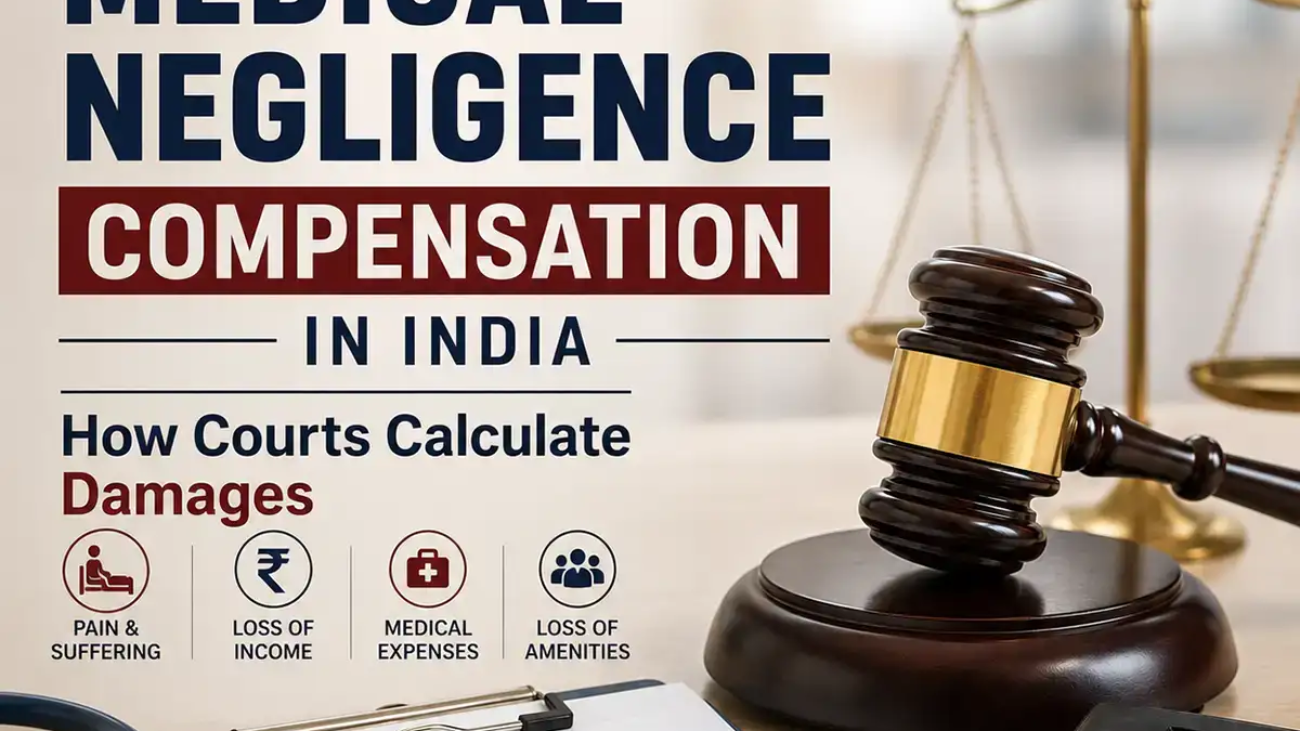
06 Time Limit for Filing a Medical Negligence Case in India Limitation Periods Explained

Time Limit for Filing a Medical Negligence Case in India: Limitation Periods Explained

Executive Summary: The time limit to file a medical negligence case in India depends entirely on the forum: two years from the date the cause of action arose for a consumer complaint under Section 69 of the Consumer Protection Act, 2019; three years generally for a civil suit for damages, under the residuary Article 113 of the Limitation Act, 1963; and, for a criminal complaint under BNS Section 106, either a three-year limitation on taking cognizance or no limitation bar at all, depending on which limb of the offence is invoked. Miscalculating when the cause of action actually arose — rather than missing the period itself — is the most common reason a medical negligence claim fails on a technicality.

Understand It in 60 Seconds

The limitation analysis a medical negligence claim must pass through, forum by forum:

Adverse Medical Outcome or
Suspected Medical Negligence Identified
                    │
                    ▼
        Which Forum is Being Approached?
                    │
     ┌──────────────┼──────────────┐
     │              │              │
     ▼              ▼              ▼
Consumer        Civil Suit      Criminal
Commission      for Damages     Complaint
                    │
────────────────────────────────────────────────────────────

1. CONSUMER COMMISSION
(Consumer Protection Act, 2019)

• Limitation: 2 Years
• Computed from:
  - Date Cause of Action Arose, or
  - Date It Was Reasonably Discovered
• Delay Possible?
  ✓ Yes
  File an application showing
  "Sufficient Cause"
  (Section 69(2))

                    │

────────────────────────────────────────────────────────────

2. CIVIL SUIT FOR DAMAGES
(Limitation Act, 1963)

• General Limitation: 3 Years
• Usually under Article 113
  (Residuary Provision)
• Verify whether a more specific
  Article applies.

Delay Possible?
✗ No

Section 5 (Condonation of Delay)
does NOT apply to Civil Suits.

Exception:
Minor or Person of Unsound Mind
(Section 6)

Limitation begins only after
the legal disability ends.

                    │

────────────────────────────────────────────────────────────

3. CRIMINAL COMPLAINT
(BNS Section 106)

General Offence
(Punishment up to 5 Years)

        ▼

No Limitation Bar
for Court to Take Cognizance

────────────────────────────────────

Registered Medical Practitioner
Proviso
(Punishment up to 2 Years)

        ▼

Limitation Period:
3 Years
(BNSS Section 514)

Measured from:
Date of FIR or Complaint Filing
(Not Date of Cognizance)

(Sarah Mathew Principle)

Court may extend limitation
if required in the
Interest of Justice
(BNSS Section 519)

                    │
                    ▼
              Special Situation
                    │
                    ▼
If Death of the Patient
Constitutes the Cause of Action,
Limitation Normally Runs
from the Date of Death,
Rather than the Earlier
Negligent Act.

Why “Time Limit” Is Not a Single Number

Doctors, hospital administrators, and even patients frequently ask for “the” limitation period for medical negligence, expecting a single figure. There is no single figure. Indian law does not treat medical negligence as one cause of action with one limitation period — it is, procedurally, three separate causes of action (consumer, civil, criminal), each governed by a different statute, each with its own starting point, and each with a different rule on whether delay can be forgiven at all. Getting the forum and the applicable period right at the outset is not a formality; it is frequently outcome-determinative before the merits are ever examined.

The Consumer Forum Route: Two Years Under Section 69

Section 69 of the Consumer Protection Act, 2019 requires that a complaint be filed within two years from the date on which the cause of action arose. In medical negligence matters, the cause of action is ordinarily linked to the negligent act, the point of injury, or — where the harm is not immediately apparent — the date on which it was, or reasonably ought to have been, discovered. Where the patient has died, the cause of action for the family typically runs from the date of death, not from an earlier date of admission or treatment.

Section 69(2) permits the Commission to entertain a complaint after the two-year period if the complainant satisfies it that there was sufficient cause for the delay, and the Commission records its reasons for condoning that delay. This condonation power should not be assumed to be freely available — it must be specifically applied for, ordinarily by an application filed along with the complaint, and the delay must be genuinely explained rather than left to the Commission to infer.

The Civil Suit Route: Three Years Under the Limitation Act, 1963 — and No Condonation

A civil suit for damages arising from medical negligence, where no more specific provision of the Limitation Act applies to the relief claimed, generally falls under the residuary Article 113 of the Schedule to the Limitation Act, 1963, which prescribes three years from the date the right to sue accrues. This is the general position applied by courts to suits not otherwise specifically provided for in the Schedule; the exact applicable Article for a given fact pattern (for instance, where the relief sought is framed differently) should be independently confirmed before filing.

The critical and frequently overlooked point is this: Section 5 of the Limitation Act, 1963 — the provision that allows delay to be “condoned” on sufficient cause — applies only to appeals and applications, not to suits. A civil suit filed even a single day beyond the applicable limitation period cannot be rescued by showing sufficient cause; courts have no general discretion to admit a time-barred suit. This makes the civil suit route considerably less forgiving of delay than either the consumer forum or the criminal process, and it is a distinction advocates should flag clearly to clients considering this route.

Section 6 of the Limitation Act, 1963 provides a specific exception for persons under a legal disability — a minor, or a person of unsound mind — at the time the right to sue accrues: such a person may institute the suit within the same period after the disability ceases (i.e., after attaining majority, or upon recovery), as would otherwise have been allowed from the date the cause of action arose. This is directly relevant where the patient harmed is a minor at the time of the negligent treatment.

The Criminal Complaint Route: Limitation Under BNSS Section 514

Section 514 of the Bharatiya Nagarik Suraksha Sanhita, 2023 (corresponding to the erstwhile Section 468 CrPC) bars a court from taking cognizance of an offence after the expiry of a prescribed period, calculated according to the maximum punishment for that offence: no bar-triggering limitation applies for offences punishable with more than three years’ imprisonment; three years applies where the punishment extends to more than one year but not more than three years; one year where imprisonment does not exceed one year; and six months for fine-only offences.

This produces a nuanced result for medical negligence prosecutions under Section 106 of the Bharatiya Nyaya Sanhita, 2023. The general offence under Section 106(1) — death by negligence — carries a maximum of five years’ imprisonment, which exceeds the three-year threshold in Section 514; on the general scheme of that section, no limitation bar applies to taking cognizance of that offence. However, the specific proviso applicable where the negligent act is done by a registered medical practitioner during a medical procedure carries a reduced maximum of two years’ imprisonment — placing it within the “exceeding one year but not exceeding three years” band, and therefore attracting a three-year limitation period under Section 514.

The Supreme Court’s Constitution Bench in Sarah Mathew v. Institute of Cardio Vascular Diseases clarified that this limitation is satisfied by the date on which the complaint is filed or prosecution is instituted, not the date on which the Magistrate actually takes cognizance — protecting a diligent complainant from being penalised for court-side delay. Separately, Section 519 of the BNSS (corresponding to the former Section 473 CrPC) preserves the court’s discretion to take cognizance beyond the limitation period where the delay has been properly explained or where the interests of justice require it.

Because this analysis turns on which specific limb of Section 106 is invoked on the facts, and because the classification of a given case as falling under the proviso versus the general provision is itself a substantive question, counsel should verify the applicable limitation position against the specific charge being pressed before advising a client that a criminal complaint is (or is not) time-barred.

Limitation Period by Forum: Comparison

ForumGoverning ProvisionLimitation PeriodStarting PointDelay Forgivable?
Consumer CommissionSection 69, Consumer Protection Act, 20192 yearsDate cause of action arises (or is discovered)Yes — Section 69(2), on sufficient cause shown by application
Civil Suit (damages)Limitation Act, 1963 — generally Article 113 (residuary)3 yearsDate right to sue accruesNo — Section 5 does not apply to suits; verify no more specific Article applies
Criminal Complaint — general Section 106(1) offenceBNSS Section 514 (offences over 3 years’ imprisonment)No limitation barNot applicableNot applicable — but delay may affect evidentiary weight
Criminal Complaint — registered medical practitioner provisoBNSS Section 514 (1–3 year band)3 yearsDate complaint filed/prosecution instituted (Sarah Mathew)Court’s discretion under BNSS Section 519, in interests of justice

The practical implication is that the same set of facts can be time-barred before a civil court while still being maintainable before the consumer forum, or vice versa — which is precisely why forum selection and limitation calculation must be assessed together, not sequentially.

Case Law and Statutory Reference Grid

Statute / CaseHolding / ProvisionRelevance to This Topic
Consumer Protection Act, 2019 — Section 69Prescribes a 2-year limitation for consumer complaints, condonable under sub-section (2) for sufficient causeGoverns the limitation period for the most commonly used forum for medical negligence claims
Limitation Act, 1963 — Article 113 (residuary), Sections 3, 5, 6Article 113: 3-year residuary period for suits with no specific provision; Section 3: bar of limitation is mandatory; Section 5: condonation applies to appeals/applications, not suits; Section 6: extension for minors/persons of unsound mind until disability ceasesGoverns the civil suit route and clarifies why delay in filing a suit — unlike a consumer complaint — generally cannot be condoned
Bharatiya Nagarik Suraksha Sanhita, 2023 — Section 514 (and Section 519)Bars cognizance of offences beyond a punishment-linked limitation period, subject to the court’s discretion under Section 519 to extend in the interest of justiceDetermines whether a criminal complaint under BNS Section 106 is time-barred, depending on which limb of the offence applies
Bharatiya Nyaya Sanhita, 2023 — Section 106(1)General offence: up to 5 years’ imprisonment for death by negligence; proviso: up to 2 years’ imprisonment where committed by a registered medical practitioner during a medical procedureThe applicable maximum punishment determines which limitation band under BNSS Section 514 applies
Sarah Mathew v. Institute of Cardio Vascular Diseases, (2014) 2 SCC 62Constitution Bench held that limitation under the cognizance-bar provision is satisfied by the date of filing the complaint/institution of prosecution, not the date the court actually takes cognizanceProtects a diligent complainant from being time-barred due to delay attributable to the court itself
Indian Medical Association v. V.P. Shantha, (1995) 6 SCC 651Held that medical services rendered for consideration fall within “service” under consumer protection lawConfirms that the consumer forum route (and its 2-year limitation) is available to paying patients in medical negligence matters

Any application of the above to a specific pending matter — particularly the classification of a criminal charge under the general limb versus the medical-practitioner proviso of Section 106 — should be independently verified against the charge as actually framed before relying on a limitation position in a filing or opinion.

Doctor’s Perspective vs Patient’s Perspective

Doctor’s / Hospital’s Reasonable Reading of the Facts

From the treating side, limitation is a legitimate and important safeguard — it protects practitioners from having to defend claims, and reconstruct clinical decision-making, many years after the event, when memories have faded and personnel may have moved on. A doctor served with a complaint filed well outside the applicable period, without any credible explanation for the delay, is entitled to raise limitation as a threshold defence, and doing so is not evasive — it is exactly what the law contemplates. This is particularly true for civil suits, where the law does not permit the same forgiveness for delay that the consumer forum extends.

Patient’s / Family’s Reasonable Reading of the Facts

From the patient’s side, the harm from medical negligence is frequently not obvious at the time it occurs — a retained instrument, a missed diagnosis, or the long-term consequence of an error may only become apparent months or years later, sometimes only after a second opinion or a subsequent, unrelated consultation reveals what went wrong. Families reasonably expect the limitation clock to run from when they could reasonably have known something was wrong, not from the date of the original, outwardly unremarkable treatment — which is precisely why the “date of discovery” question is so heavily litigated, and why early legal advice on when the clock has actually started running is critical.

Anonymised Case Illustration

Allegation

A patient underwent an abdominal surgery at a private hospital. Roughly fourteen months later, persistent unexplained pain led to imaging at a different facility, which revealed a retained surgical item from the original procedure. The patient wishes to pursue both a consumer complaint and is considering a criminal complaint.

Records Available

Original operative notes and consent form, discharge summary from the first hospital, and the imaging report and consultation notes from the second facility that identified the retained item.

Missing Evidence

Instrument/sponge count records from the original surgery (if maintained), and any earlier complaint or consultation by the patient about unexplained symptoms between the original surgery and the eventual discovery, which would help fix the actual date of discoverability for limitation purposes.

Possible Defence

The hospital may argue that the patient’s symptoms should reasonably have prompted an earlier consultation, and that the limitation clock should run from an earlier point of constructive knowledge rather than the date of the eventual imaging — a fact-specific argument that depends heavily on the medical plausibility of when the symptoms became attributable to a retained item.

What Expert Review Is Still Needed

An independent expert opinion is needed to establish (a) the clinical timeline of when symptoms consistent with a retained surgical item would reasonably have been expected to manifest, which in turn fixes the date of discoverability and therefore the starting point for both the 2-year consumer forum limitation and the 3-year civil suit limitation, and (b) whether the retained item itself is prima facie evidence of a breach of the standard of care, independent of the limitation analysis.

Practical Checklist

Before Filing: Confirm the Limitation Position

☐  Identify the forum(s) intended to be approached — consumer, civil, criminal, or a combination

☐  Fix the precise date the cause of action arose — date of the negligent act, date of injury, date of discovery, or date of death, as applicable

☐  Compute the applicable period for each forum separately (2 years / 3 years / no bar / 3 years, as applicable)

☐  For civil suits: confirm no more specific Article of the Limitation Act applies instead of the residuary Article 113

☐  For civil suits: do not assume delay can be condoned — Section 5 does not apply to suits

☐  For minors or persons of unsound mind: confirm the Section 6 disability extension and when the disability ceased

☐  For criminal complaints: confirm which limb of BNS Section 106 is invoked, since this determines the applicable BNSS Section 514 band

☐  Where filing beyond the ordinary period, prepare a specific, evidenced condonation/extension application rather than relying on the forum’s general discretion

☐  Preserve all records evidencing when the harm was, or reasonably could have been, discovered — this evidence is often more contested than the negligence itself

Frequently Asked Questions

1. What is the time limit to file a medical negligence case in India?

It depends on the forum: 2 years for a consumer complaint (Section 69, CPA 2019), generally 3 years for a civil suit (Limitation Act, 1963), and either 3 years or no limitation bar for a criminal complaint under BNS Section 106, depending on which limb of that section applies.

2. When does the limitation period start — from the date of the negligent act or the date the harm was discovered?

Ordinarily from the date the cause of action arises, but where the harm is not immediately apparent, courts and consumer commissions have recognised the relevance of the date of discovery. This is a fact-specific and frequently contested question.

3. Can the time limit be extended if I file late?

It depends on the forum. Consumer complaints can be filed late if delay is condoned under Section 69(2) for sufficient cause. Civil suits generally cannot be salvaged by condonation once the Limitation Act period has passed, since Section 5 does not apply to suits. Criminal complaints may be extended at the court’s discretion under BNSS Section 519.

4. If the patient died, from when is the limitation period calculated?

Ordinarily from the date of death, where death is itself the cause of action being complained of, rather than from an earlier date of admission or treatment — though this should be confirmed against the specific facts.

5. Is there a different time limit if the patient is a minor?

For civil suits, Section 6 of the Limitation Act, 1963 allows a minor to file within the ordinarily applicable period after attaining majority. The position for consumer complaints and criminal complaints involving minors should be separately confirmed.

6. Can I file both a consumer complaint and a criminal complaint for the same incident?

Yes, the two routes are not mutually exclusive and carry separate, independently calculated limitation periods, as set out above.

7. Is there really no time limit for a criminal case against a hospital for a patient’s death?

Where the general offence under BNS Section 106(1) is invoked (maximum 5 years’ imprisonment), no limitation bar applies to taking cognizance under BNSS Section 514, since that provision’s time bands cap out at offences carrying up to 3 years. Where the reduced 2-year proviso specific to registered medical practitioners applies instead, a 3-year limitation does apply.

8. What happens if I am not sure which limitation period applies to my case?

Given how forum-dependent and fact-specific this analysis is, a preliminary medico-legal and limitation assessment before filing is strongly advisable — filing in the wrong forum, or after the applicable period has lapsed, can foreclose an otherwise meritorious claim entirely.

How Doctor in Law Can Help

Limitation is decided at the very first hearing, often before the merits of a medical negligence allegation are examined at all — which makes getting the starting date and the applicable period right, for the specific forum being approached, one of the highest-value steps in the entire process. Doctor in Law provides preliminary medico-legal record screening and chronology reconstruction to fix the precise date the cause of action arose (or was discoverable), and a forum-and-limitation assessment for patients and families evaluating where and when to file, and for hospitals and doctors assessing whether a complaint received is, in fact, time-barred.

Authorities & Sources

  • Statute: Consumer Protection Act, 2019 — Section 69
  • Statute: Limitation Act, 1963 — Sections 3, 5, 6, and Article 113 of the Schedule
  • Statute: Bharatiya Nagarik Suraksha Sanhita, 2023 — Sections 514 and 519
  • Statute: Bharatiya Nyaya Sanhita, 2023 — Section 106(1)
  • Supreme Court Judgment: Sarah Mathew v. Institute of Cardio Vascular Diseases, (2014) 2 SCC 62
  • Supreme Court Judgment: Indian Medical Association v. V.P. Shantha, (1995) 6 SCC 651

Medically and legally reviewed on July 16, 2026.

This article is for professional and educational reference only and does not constitute legal advice for any specific matter. The classification of a specific criminal charge, or the precise Article of the Limitation Act applicable to a specific civil claim, should be independently confirmed against the facts and the charge/pleading as framed before relying on any limitation position stated here.

Written by: Dr Shashank Sharma, MBBS, MD Forensic Medicine, LLB — Medico-Legal Consultant and Medical Jurist
05 Medical Negligence Compensation in India How Courts Calculate Damages

Medical Negligence Compensation in India: How Courts Calculate Damages

Executive Summary: Indian courts and consumer commissions compute medical negligence compensation using a structured multiplier method — borrowed from motor accident jurisprudence and extended to medical negligence in Nizam Institute of Medical Sciences v. Prasanth S. Dhananka (2009) and Balram Prasad v. Kunal Saha (2014) — that separately quantifies pecuniary loss (medical expenses, loss of earning capacity, attendant care) and non-pecuniary loss (pain, suffering, loss of amenity), then applies an age-based multiplier to future loss of income before adding interest. No fixed formula exists for non-pecuniary heads; these remain within the tribunal’s discretion, guided by precedent rather than a statutory tariff.

Understand It in 60 Seconds

Negligence and Causation Established
(Compensation is assessed only after liability is proved)
                    │
                    ▼
            Classify the Loss
                    │
        ┌───────────┴───────────┐
        │                       │
        ▼                       ▼
   Pecuniary Loss         Non-Pecuniary Loss
(Financial Losses)      (General Damages)
        │                       │
        │                       ├──────────────────────────────┐
        │                       │                              │
        ▼                       ▼                              ▼
Medical Expenses        Pain and Suffering          Loss of Amenity /
Already Incurred                                    Quality of Life
        │                       │                              │
        ▼                       ▼                              ▼
Future Medical &        Loss of Consortium /       Other Non-Pecuniary
Rehabilitation Costs    Expectation of Life        Damages (if applicable)
        │
        ▼
Loss of Earning Capacity
(Net Annual Income ×
Age-Based Multiplier)
        │
        ▼
Attendant Care Costs
(Where Permanent Disability Exists)
        │
        ▼
     Total Pecuniary Loss
(Medical + Future Care +
Income Loss + Attendant Care)
        │
        └──────────────┐
                       │
                       ▼
         Total Non-Pecuniary Loss
   (Discretionary, Guided by Judicial Precedent)
                       │
                       ▼
          Calculate Total Compensation
      (Pecuniary + Non-Pecuniary Damages)
                       │
                       ▼
             Add Interest Award
(Usually from Date of Complaint/Plaint
until Date of Realisation)
                       │
                       ▼
                Final Compensation Award

Why Compensation Calculation Is a Distinct Legal Exercise

Establishing negligence and quantifying compensation are two separate legal exercises, governed by different reasoning. A finding of breach of duty and causation only opens the door to compensation; it does not, by itself, indicate the amount. Indian medico-legal practice has increasingly relied on a structured method rather than an impressionistic lump sum, primarily because appellate scrutiny of consumer commission awards has repeatedly required a transparent, head-wise breakdown that can be tested on appeal.

The Multiplier Method: Origin and Extension to Medical Negligence

The multiplier method originates in motor accident compensation jurisprudence, where a victim’s or deceased’s net annual income is multiplied by a figure representing the number of years of future loss, adjusted for the time-value of a lump-sum payment and the recipient’s age. Nizam Institute of Medical Sciences v. Prasanth S. Dhananka (2009) 6 SCC 1 is the landmark extension of this reasoning to medical negligence, awarding substantial compensation to a young patient rendered paraplegic following surgical negligence, and structuring the award across distinct heads rather than as an undifferentiated sum. Balram Prasad v. Kunal Saha (2014) 1 SCC 384 — arising from the death of Anuradha Saha, following the earlier liability finding in Malay Kumar Ganguly v. Dr. Sukumar Mukherjee (2009) 9 SCC 221 — further entrenched this head-wise, multiplier-based approach for computing compensation in medical negligence resulting in death, and is frequently cited for having substantially enhanced the compensation initially awarded by the National Commission. Verify the specific multiplier tables, exact age-bracket figures, and the precise compensation sums awarded in these judgments against the original judgment text before citing or relying on them in any pleading or publication — this article does not reproduce specific award figures, as doing so without verification risks stating an inaccurate number as settled fact.

Pecuniary Loss: What Is Actually Reimbursable

Pecuniary loss covers heads that can, in principle, be evidenced by bills, receipts, and income records:

  • Medical expenses already incurred — hospitalisation, corrective treatment, medication, and any expenses reasonably attributable to the negligent treatment or its correction.
  • Future medical and rehabilitation costs — projected, on expert medical evidence, for ongoing treatment, physiotherapy, assistive devices, or further corrective surgery.
  • Loss of earning capacity — computed via the multiplier method where the disability is permanent or long-term; for temporary disability, the loss is typically the actual income lost during the recovery period, evidenced by salary records or professional earnings.
  • Cost of attendant care — where the patient requires ongoing nursing or personal care as a result of the negligence, tribunals have accounted for this as a distinct, quantifiable head, evidenced by the nature and extent of the resulting disability.

Each of these heads requires contemporaneous documentary support; a claim under any pecuniary head that is not evidenced by bills, employment records, or expert medical projection is vulnerable to being discounted or disallowed.

Non-Pecuniary Loss: The Discretionary Component

Non-pecuniary heads — pain and suffering, loss of amenity, loss of consortium, and (in death cases) loss of expectation of life — do not lend themselves to receipts or income records. Indian courts and commissions exercise discretion here, informed by the severity and permanence of the injury, the age of the victim, and awards in comparable precedent, rather than any statutory tariff. Because this head is inherently discretionary, it is also the component most frequently contested on appeal — both for being excessive and for being inadequate — and complainants should expect this figure to vary considerably between forums and over time rather than following a predictable formula.

Interest and the Timing of the Award

Compensation awards in both civil suits and consumer complaints typically carry interest from a specified date — commonly the date of filing the complaint or plaint — until the date of actual payment, at a rate the forum considers just in the circumstances. The applicable interest rate is not fixed by statute for medical negligence claims generally and varies by forum and case; the current prevailing rate practice should be verified at the time of drafting any claim or defence, since rates awarded have varied across periods and forums.

Civil Suit Versus Consumer Complaint: How Damages Computation Differs

AspectCivil SuitConsumer Complaint
Governing frameworkLaw of Torts, evidence led at trialConsumer Protection Act, 2019; summary/documentary procedure
Typical methodHead-wise computation, multiplier method for income loss where applicableSame head-wise/multiplier approach, but often decided on affidavits and documentary evidence
Evidentiary rigourFull trial, cross-examination of witnesses and expertsGenerally documentary, with affidavit evidence; oral examination is more limited
TimelineOften the longest routeComparatively faster, though high-value claims can still take years
Appeal structureHigh Court, then Supreme CourtState Commission → National Commission → Supreme Court
Best suited forComplex causation disputes needing detailed oral evidenceClaims where documentary evidence is strong and the negligence is reasonably clear

Pecuniary Versus Non-Pecuniary Damages

FeaturePecuniary DamagesNon-Pecuniary Damages
BasisDocumented financial loss (bills, income records, expert cost projections)Subjective harm — pain, suffering, loss of enjoyment of life
Method of computationActual expense + multiplier method for future income lossDiscretionary, guided by precedent and severity of injury
Evidentiary burdenHigh — bills, salary slips, expert projections requiredLower documentary burden, but still requires medical evidence of severity/permanence
PredictabilityRelatively predictable once documents are in handVariable; the most frequently litigated head on appeal
ExamplesHospital bills, future surgery cost, lost salary, attendant’s wagesPain and suffering, loss of amenity, loss of consortium

Doctor’s Perspective

From the treating doctor’s or hospital’s standpoint, the compensation exercise is where documentation gaps translate directly into financial exposure — an undocumented but genuine complication can be conflated, in the damages computation, with a negligently caused injury if the record does not clearly distinguish the two. Doctors and hospitals defending a claim have a legitimate interest in ensuring that any compensation, if awarded, is computed strictly against the harm actually attributable to the alleged negligence, and not inflated by unrelated pre-existing conditions or independent complications that would have occurred regardless of the standard of care provided.

Patient’s Perspective

From the patient or family’s standpoint, the concern is that compensation, if awarded, genuinely reflects the real and ongoing cost of the negligence — future medical needs, lost earning capacity over a working lifetime, and the lasting impact on quality of life — rather than a token sum disconnected from the actual severity of the injury. Patients are often unaware, until advised, that heads such as future medical costs and attendant care require independent expert projection to be recoverable; a claim that omits this evidence risks recovering substantially less than the injury’s true lifetime cost, regardless of how clearly negligence is established.

Anonymised Case Illustration

Allegation: A patient in their early thirties alleges that a delayed diagnosis of a treatable spinal condition resulted in permanent partial paralysis, ending their prior occupation.

Records available: Initial consultation notes, imaging reports, the eventual diagnosis and treatment records, and the patient’s employment and salary history prior to the injury.

Missing evidence: An independent vocational/rehabilitation assessment of residual earning capacity in an alternative occupation, and a projected costing of long-term attendant care and assistive equipment needs.

Possible defence: If imaging at the initial consultation did not, in fact, show findings that a reasonably competent practitioner would have flagged at that stage, the delay may not be attributable to negligence at all — this is a liability question that must be resolved before any compensation computation is undertaken.

What expert review is still needed: Independent neurological/orthopaedic opinion on whether earlier intervention would probably have prevented the paralysis (causation), together with a vocational expert’s assessment of residual earning capacity and a costed care plan — without both, neither liability nor the quantum of pecuniary loss can be reliably established.

Practical Checklist for Assembling a Compensation Claim

  • Complete medical records establishing the nature, cause, and permanence of the injury
  • All original medical bills and receipts, organised chronologically
  • Employment records — salary slips, appointment letters, income tax returns — to establish pre-injury earning capacity
  • Independent expert opinion projecting future medical/rehabilitation costs
  • Vocational assessment of residual earning capacity, where a return to the prior occupation is not possible
  • Documentation of attendant care needs, if applicable, including its expected duration
  • Evidence of any pre-existing condition that could be argued to have contributed independently to the outcome (relevant to apportionment)
  • A clear, head-wise computation sheet distinguishing pecuniary from non-pecuniary claims, ready to support the relief sought in the complaint or plaint

Frequently Asked Questions

Q1. Is there a fixed formula for calculating medical negligence compensation in India?

There is a structured method — the multiplier approach for loss of earning capacity, combined with itemised pecuniary heads — but no single statutory formula covering every head, particularly non-pecuniary loss, which remains discretionary and precedent-guided.

Q2. What is the multiplier method?

It computes loss of future earning capacity by multiplying net annual income by an age-based multiplier, a method drawn from motor accident compensation jurisprudence and extended to medical negligence in cases such as Nizam Institute of Medical Sciences v. Prasanth S. Dhananka.

Q3. Can I claim for future medical expenses that haven’t been incurred yet?

Yes, provided they are supported by independent expert medical opinion projecting the treatment, rehabilitation, or equipment the patient will require going forward.

Q4. Does compensation include pain and suffering, not just financial loss?

Yes — pain and suffering, loss of amenity, and (in appropriate cases) loss of consortium are recognised non-pecuniary heads, computed at the forum’s discretion rather than through a fixed formula.

Q5. Is compensation reduced if the patient had a pre-existing condition?

Potentially — where a pre-existing condition independently contributed to the outcome, forums may apportion the award to reflect only the loss attributable to the negligence, though this depends heavily on the specific medical evidence in each case.

Q6. Does the compensation amount differ between a consumer complaint and a civil suit?

The underlying method (head-wise, multiplier-based) is broadly similar, but the evidentiary process differs — civil suits allow fuller oral evidence and cross-examination, which can affect how disputed heads (such as future loss) are ultimately quantified.

Q7. Is interest awarded on top of the compensation amount?

Yes, typically from the date of filing the complaint or plaint until realisation, at a rate the forum considers reasonable in the circumstances — this should be verified for current practice at the time of filing.

Q8. Can compensation be enhanced on appeal?

Yes — Balram Prasad v. Kunal Saha is a leading example of the Supreme Court substantially revisiting and enhancing a compensation figure on appeal from the National Commission, underscoring that the initial award is not necessarily final.

How Doctor in Law Can Help

Whether a claim is being assembled or defended, the compensation computation is only as strong as the documentation behind each head — a claim without expert projections for future cost, or a defence without a clear separation of pre-existing conditions from the alleged negligence, rarely survives close scrutiny. Doctor in Law provides preliminary medico-legal record screening and quantum-assessment support to identify, before a claim is filed or a defence is drafted, which heads of compensation the available documentation can actually sustain, and what additional expert evidence is required to make the claim defensible.

Authorities & Sources

TypeReference
StatuteConsumer Protection Act, 2019
SC JudgmentNizam Institute of Medical Sciences v. Prasanth S. Dhananka, (2009) 6 SCC 1 (verify exact multiplier/quantum figures before citing)
SC JudgmentBalram Prasad v. Kunal Saha, (2014) 1 SCC 384 (verify exact compensation figure before citing)
SC JudgmentMalay Kumar Ganguly v. Dr. Sukumar Mukherjee, (2009) 9 SCC 221 (liability finding preceding the Kunal Saha compensation appeal)
Comparative jurisprudenceMotor accident compensation multiplier tables (verify current applicable table/precedent before citing exact multiplier figures)
Regulatory/procedural guidanceNational Consumer Disputes Redressal Commission — procedural practice on quantum evidence (verify current practice before publishing)

Medically and legally reviewed on 16 July 2026.

Written by: Dr Shashank Sharma, MBBS, MD Forensic Medicine, LLB — Medico-Legal Consultant and Medical Jurist
04 Medical Negligence in Consumer Court Procedure, Jurisdiction, Fees, and Documents Required

Medical Negligence in Consumer Court: Procedure, Jurisdiction, Fees, and Documents Required

Executive Summary: A medical negligence complaint under the Consumer Protection Act, 2019 must be filed before the Commission whose pecuniary jurisdiction matches the value of medical services paid for — the District Commission up to ₹50 lakh, the State Commission above ₹50 lakh up to ₹2 crore, and the National Commission above ₹2 crore — and must be instituted within two years of the cause of action. The complaint succeeds or fails primarily on three things: correct forum selection, complete contemporaneous treatment records, and independent expert medical opinion establishing breach of the accepted standard of care and its causal link to the harm.

Understand It in 60 Seconds

The decision path a medical negligence complaint travels before a consumer forum:

Adverse Medical Outcome or Suspected Deficiency in Service
                         │
                         ▼
Was medical treatment paid for as a service? (V.P. Shantha carve-out for purely free / personal-service treatment)
                         │
              ┌──────────┴──────────┐
              │                     │
             Yes                    No
              │                     │
              ▼                     ▼
          Proceed        Outside Consumer Forum

              │
              ▼
Determine PECUNIARY jurisdiction (value of consideration paid for treatment)
              │
     ┌────────┼───────────────┐
     │        │               │
     ▼        ▼               ▼
 Up to      Above ₹50      Above
 ₹50 Lakh   Lakh to        ₹2 Crore
            ₹2 Crore
     │        │               │
     ▼        ▼               ▼
 District   State         National
Commission Commission    Commission
              │
              ▼
   Determine Territorial Jurisdiction (Section 34(2))
              │
              ▼
 Any One of the Following:
 • Opposite Party's Residence / Business / Branch Office
 • Place Where the Cause of Action Arose
 • Complainant's Residence or Place of Work
              │
              ▼
      Filed Within Two Years?
              │
      ┌───────┴────────┐
      │                │
     Yes               No
      │                │
      ▼                ▼
 Proceed with      Apply for
 Filing            Condonation of Delay
                   (Sufficient Cause)
      │
      ▼
 Pay Applicable Consumer Forum Fee
 (Nil up to ₹5 Lakh; Prescribed Fee Above)
      │
      ▼
 Commission Decides Admissibility
 (Ordinarily Within 21 Days)
      │
      ▼
 Notice Issued to Opposite Party
      │
      ▼
          Evidence Stage
 • Medical Records
 • Expert Opinion
 • Proof of Breach of Duty
 • Proof of Causation
 • Cross-Examination (where applicable)
      │
      ▼
            Final Order
 • Compensation
 • Litigation Costs
 • Other Appropriate Directions
      │
      ▼
            Appeal Process
      │
      ▼
District Commission
        │
   (45 Days)
        ▼
State Commission
        │
   (30 Days)
        ▼
National Commission
        │
   (30 Days)
        ▼
Supreme Court of India

Is Medical Treatment a “Service” Under Consumer Law?

The threshold question in any medical negligence complaint before a consumer forum is whether the treatment constitutes a “service” within the meaning of the Consumer Protection Act. The Supreme Court in Indian Medical Association v. V.P. Shantha held that medical services rendered for consideration fall within the definition of “service,” bringing paying patients within the consumer forum’s jurisdiction. Practitioners should note the nuance that services rendered free of charge, or under a contract of personal service, may fall outside this definition — the precise contours of this carve-out on a given fact pattern should be verified against the current judicial position before it is relied upon to contest or found jurisdiction.

Who Can File the Complaint

Under the Act, a complaint may be instituted by:

  • The patient (consumer) personally, or through an authorised agent
  • A recognised voluntary consumer association
  • One or more patients having the same interest, on behalf of a class
  • The Central Government or a State Government
  • The legal heirs or legal representatives of the patient, where death has occurred
  • A parent or legal guardian, where the patient is a minor

Pecuniary Jurisdiction: Which Commission to Approach

Pecuniary jurisdiction under the Consumer Protection Act, 2019 is fixed by the value of the goods or services paid as consideration — not by the compensation claimed, which was the position under the earlier 1986 Act. The Central Government revised the original statutory slabs through the Consumer Protection (Jurisdiction of the District Commission, the State Commission and the National Commission) Rules, 2021, and it is the revised, lower thresholds below that currently govern filing.

CommissionCurrent Pecuniary JurisdictionBasis
District CommissionValue of consideration paid does not exceed ₹50 lakhSection 34(1), as revised by the 2021 Rules
State CommissionExceeds ₹50 lakh but does not exceed ₹2 croreSection 47(1), as revised by the 2021 Rules
National CommissionExceeds ₹2 croreSection 58(1), as revised by the 2021 Rules

For a medical negligence complaint, the “value of services paid as consideration” is generally read as the treatment cost/billed amount, not the compensation sought for injury or death — an important and frequently litigated distinction that should be independently confirmed against current NCDRC precedent for the specific fact pattern, since forum-shopping by inflating claimed compensation is precisely what the consideration-based test was designed to prevent.

Territorial Jurisdiction: Where to File

Section 34(2) permits a complaint to be instituted within the local limits of whichever Commission covers any of the following:

  • Where the opposite party (hospital/doctor) ordinarily resides, carries on business, or has a branch office; or
  • Where the cause of action, wholly or in part, arose; or
  • Where the complainant (patient/family) resides or personally works for gain — a patient-friendly ground introduced by the 2019 Act that did not exist under the 1986 Act.

This last ground is particularly significant for medical negligence matters involving treatment obtained outside the patient’s home city or state — the complainant is not required to litigate at the hospital’s location.

Limitation Period

Section 69 requires a complaint to be filed within two years from the date on which the cause of action arose — ordinarily the date of the negligent act, or the date the deficiency/injury was discovered where that differs. Delay beyond two years may be condoned by the Commission on an application showing sufficient cause, but condonation is discretionary and should never be assumed; the application for condonation should be filed simultaneously with the complaint, supported by a clear explanation for the delay.

Fees for Filing

Filing fees are nominal and scale with the value of the claim, payable by demand draft, Indian Postal Order, or electronically as arranged by the Commission concerned. Complaints valued up to ₹5 lakh currently attract no filing fee. Above that threshold, a sliding scale applies. Because fee slabs have been revised more than once since 2019, the exact current amount applicable to a specific claim value should be verified against the fee schedule presently in force under the Consumer Protection (Consumer Disputes Redressal Commissions) Rules, 2020 and any subsequent amendment, rather than relied upon from a general reference such as this article.

Step-by-Step Filing Procedure

  1. Obtain and preserve the complete treatment record — the patient (or legal heir) has a right to certified copies of case papers, and gaps in the record should be documented, not assumed to be innocent.
  2. Consider sending a written representation or legal notice to the hospital/doctor before filing. This is good practice and often prompts an internal resolution or at least a documented response, though it is not a mandatory statutory precondition to filing under the Act — verify current Commission practice before treating it as compulsory.
  3. Draft the complaint in writing (plain paper is sufficient; no court-fee stamp paper is required), stating parties’ details, facts and chronology, the specific deficiency in service alleged, relief/compensation claimed, and list of documents relied upon. The complaint should be verified/supported by affidavit as required by the Commission’s rules.
  4. Determine the correct Commission by pecuniary and territorial jurisdiction, and compute the applicable fee.
  5. File online via the e-Daakhil portal or physically, with the required number of copies (typically three sets for the District Commission, more for State/National, plus one for each opposite party).
  6. The Commission decides admissibility, ordinarily within 21 days; if not decided within that period, the complaint is deemed admitted.
  7. On admission, notice is issued to the opposite party, who must respond within 30 days (extendable by up to 15 days).
  8. Evidence stage: affidavits of the parties, medical records, and — critically — independent expert medical opinion addressing breach of the standard of care and causation.
  9. Final hearing and order: compensation, refund, cost of litigation, and/or specific directions as the Commission deems fit.
  10. Appeal, if aggrieved: District Commission order to the State Commission within 45 days; State Commission order to the National Commission within 30 days; National Commission order to the Supreme Court within 30 days — appeals against a monetary award generally require deposit of a prescribed percentage of the awarded amount, which should be confirmed at the time of filing the appeal.

Consumer Complaint vs Civil Suit vs Criminal Complaint

AspectConsumer Complaint (CPA 2019)Civil Suit (Tort)Criminal Complaint (BNS s.106)
Standard of negligenceOrdinary/simple negligence (Bolam standard)Ordinary/simple negligenceGross or reckless negligence only
ForumDistrict/State/National CommissionCivil Court of competent jurisdictionCriminal Court, on police investigation or complaint
RemedyCompensation, refund, costDamagesImprisonment (up to 2 years for a registered medical practitioner) and fine
Procedural formalitySummary, consumer-friendly; no court fee for small claimsFull civil procedure (CPC), generally slowerGoverned by BNSS; expert opinion safeguard recommended before prosecution (Jacob Mathew)
Typical timelineMeant to be disposed within 3–5 months of notice to opposite party (often longer in practice)Can extend several yearsInvestigation and trial timelines vary widely

Many complainants pursue the consumer forum and a criminal complaint in parallel; the lower threshold for consumer liability (ordinary negligence) makes it the more commonly successful route for compensation, while criminal liability remains reserved for conduct crossing into gross or reckless negligence.

Case Law and Statutory Reference Grid

Statute / CaseHolding / ProvisionRelevance to This Topic
Consumer Protection Act, 2019 — Sections 34, 35, 47, 58, 69Establishes the three-tier Commission structure, pecuniary and territorial jurisdiction, persons entitled to file, and limitation periodCore procedural framework governing where, when, and by whom a medical negligence complaint may be filed
Consumer Protection (Jurisdiction of the District Commission, the State Commission and the National Commission) Rules, 2021Revised pecuniary jurisdiction to ₹50 lakh / ₹2 crore thresholdsDetermines the correct forum today; supersedes the original 2019 Act figures of ₹1 crore / ₹10 crore
Indian Medical Association v. V.P. Shantha, (1995) 6 SCC 651Held that medical services rendered for consideration are “service” under consumer protection lawEstablishes that paying patients (and, by extension, their legal heirs) may approach the consumer forum for medical negligence
Jacob Mathew v. State of Punjab, (2005) 6 SCC 1Adopted the Bolam standard for medical negligence in India; distinguished simple negligence from gross/reckless negligence for criminal liabilityDefines the substantive standard the consumer forum applies when assessing breach — relevant to what expert opinion must establish
Kusum Sharma v. Batra Hospital and Medical Research Centre, (2010) 3 SCC 480Laid down propositions distinguishing an accepted complication or error of judgment from actionable negligenceFrequently cited by consumer fora when assessing whether the evidence establishes breach, not merely an adverse outcome
Malay Kumar Ganguly v. Dr. Sukumar Mukherjee, (2009) 9 SCC 221Supreme Court upheld a finding of medical negligence and awarded compensation on the facts before itIllustrates the consumer/civil compensation route reaching the Supreme Court on appeal — verify exact procedural history and quantum before citing specific figures in a filing
Bharatiya Nyaya Sanhita, 2023, Section 106(1)Criminal liability for death by negligence; reduced 2-year maximum term specifically for a registered medical practitioner acting during a medical procedureRelevant where a parallel or alternative criminal complaint is contemplated alongside the consumer forum route

Entries above involving specific compensation figures or precise procedural history should be independently confirmed against the certified judgment before being relied upon in a pleading, opinion, or publication.

Doctor’s Perspective vs Patient’s Perspective

Doctor’s / Hospital’s Reasonable Reading of the Facts

From the treating side, a consumer complaint is often perceived as disproportionate to what was, on the record, an accepted complication or a reasonable clinical judgment made without hindsight. The hospital’s defence typically rests on demonstrating adherence to protocol, properly documented informed consent, and timely referral or escalation where indicated — and on the argument that the value of consideration paid, correctly computed, may place the claim outside the forum’s pecuniary jurisdiction or that the two-year limitation period has lapsed without sufficient cause for delay.

Patient’s / Family’s Reasonable Reading of the Facts

From the patient’s side, the consumer forum route is attractive precisely because it does not require proof of gross or criminal-grade negligence, allows filing at the patient’s own place of residence, and — for smaller claims — involves no filing fee and a simplified procedure without mandatory legal representation. Families frequently see the forum as the only realistically accessible route to accountability and compensation, particularly where a criminal complaint would face a higher evidentiary threshold and slower process.

Anonymised Case Illustration

Allegation

A patient’s family alleges that a delay in diagnosing a post-surgical infection, following a paid elective procedure at a private hospital, led to prolonged hospitalisation, additional surgery, and financial loss, and seeks compensation before the District Commission.

Records Available

Admission and discharge summaries, billing statements reflecting the consideration paid, post-operative nursing charts, and the informed consent form for the original procedure.

Missing Evidence

Contemporaneous clinical notes for the specific days between the onset of fever/symptoms and the point of diagnosis; any internal escalation communication between nursing staff and the treating surgeon; and an independent expert opinion addressing whether the interval before diagnosis was within an accepted clinical window.

Possible Defence

If the observation and follow-up protocol applicable to this procedure category was followed and the infection was identified and treated within an accepted timeframe for that clinical presentation, the hospital may argue the complication was managed within the standard of care — subject to expert confirmation of what that accepted timeframe actually is for this specific procedure and patient profile.

What Expert Review Is Still Needed

An independent expert opinion is required to establish (a) whether the monitoring and follow-up protocol met the accepted standard, (b) whether the diagnostic delay, if any, was a breach or an acceptable variation, and (c) whether earlier diagnosis would, on balance of probability, have altered the outcome and the extent of loss — the causation question on which the claim ultimately rests. Counsel should also independently verify the exact consideration paid, since this determines whether the District Commission (as filed) in fact has pecuniary jurisdiction, or whether the matter properly belongs before the State Commission.

Practical Checklist

Documents Needed Before Filing (or Assessing) a Complaint

☐  Complete case file — admission to discharge (or death), not a summary

☐  Billing/consideration paid documents (determines pecuniary jurisdiction)

☐  Consent forms specific to the procedure performed

☐  Nursing observation charts and vitals monitoring sheets

☐  OT/procedure notes and anaesthesia charts, where applicable

☐  Laboratory and imaging reports with timestamps

☐  Discharge summary / death summary

☐  Correspondence or representation sent to the hospital/doctor, if any

☐  Proof of complainant’s residence (for territorial jurisdiction under Section 34(2)(d))

☐  Independent expert medical opinion, or at minimum, a clear plan for obtaining one

☐  Calculation confirming which forum has pecuniary jurisdiction based on consideration paid

☐  Timeline confirming the complaint is within the two-year limitation period, or a draft condonation application if not

Frequently Asked Questions

1. Which consumer forum should I approach for a medical negligence claim?

The forum is determined by the value of the medical services paid for (not the compensation claimed): up to ₹50 lakh — District Commission; above ₹50 lakh up to ₹2 crore — State Commission; above ₹2 crore — National Commission.

2. Is there a time limit to file a medical negligence complaint in consumer court?

Yes. A complaint must ordinarily be filed within two years from the date the cause of action arose, though delay can be condoned for sufficient cause on application.

3. Do I need a lawyer to file a consumer complaint for medical negligence?

No. The consumer forum is designed to allow a complainant to file and represent the case personally, though given the technical, expert-opinion-dependent nature of medical negligence matters, legal assistance is generally advisable.

4. What is the filing fee for a medical negligence complaint?

Complaints valued up to ₹5 lakh currently attract no filing fee; a sliding scale applies above that. The precise current slab should be confirmed against the fee schedule in force at the time of filing.

5. Can I file the complaint in my own city if the hospital is located elsewhere?

Yes. Section 34(2)(d) permits filing where the complainant resides or personally works for gain, in addition to where the opposite party is located or the cause of action arose.

6. What happens if I file in the wrong commission based on pecuniary jurisdiction?

The complaint may be dismissed or returned for want of jurisdiction, requiring re-filing before the correct Commission — underscoring the importance of correctly computing the consideration paid before filing.

7. Is expert medical opinion mandatory in a consumer complaint against a doctor?

It is not always a strict statutory precondition to filing, but Commissions place heavy reliance on independent expert opinion to determine breach of the standard of care and causation, and its absence significantly weakens a complaint on merits.

8. Can I pursue both a consumer complaint and a criminal complaint for the same incident?

Yes, the two routes are not mutually exclusive, though they operate on different standards — ordinary negligence for consumer/civil liability, and gross or reckless negligence for criminal liability under BNS Section 106.

How Doctor in Law Can Help

Correct forum selection, a defensible limitation timeline, and independent expert opinion on breach and causation decide most medical negligence matters before they are ever argued on merits. Doctor in Law provides preliminary medico-legal record screening, chronological reconstruction of the treatment timeline, and jurisdiction and limitation assessment — for patients evaluating whether and where to file, and for hospitals and doctors assessing exposure and preparing a defence, before the complaint is drafted or responded to.

Authorities & Sources

  • Statute: Consumer Protection Act, 2019 — Sections 34, 35, 47, 58, 69
  • Rules: Consumer Protection (Jurisdiction of the District Commission, the State Commission and the National Commission) Rules, 2021
  • Rules: Consumer Protection (Consumer Disputes Redressal Commissions) Rules, 2020 (fee schedule — verify current amounts before filing)
  • Supreme Court Judgment: Indian Medical Association v. V.P. Shantha, (1995) 6 SCC 651
  • Supreme Court Judgment: Jacob Mathew v. State of Punjab, (2005) 6 SCC 1
  • Supreme Court Judgment: Kusum Sharma v. Batra Hospital and Medical Research Centre, (2010) 3 SCC 480
  • Supreme Court Judgment: Malay Kumar Ganguly v. Dr. Sukumar Mukherjee, (2009) 9 SCC 221 — verify quantum/procedural detail before publishing
  • Statute: Bharatiya Nyaya Sanhita, 2023, Section 106(1) (parallel criminal route reference)

Medically and legally reviewed on July 16, 2026.

This article is for professional and educational reference only and does not constitute legal advice for any specific matter. Entries marked “verify before publishing” should be independently confirmed against certified judgments and current fee/jurisdiction notifications before use in any filing, opinion, or publication.

Written by: Dr Shashank Sharma, MBBS, MD Forensic Medicine, LLB — Medico-Legal Consultant and Medical Jurist

03 How to File a Medical Negligence Complaint Against a Doctor or Hospital

How to File a Medical Negligence Complaint Against a Doctor or Hospital

Executive Summary: A medical negligence complaint in India can be pursued through four distinct, non-mutually-exclusive routes — a consumer complaint under the Consumer Protection Act, 2019 (for compensation), a civil suit for damages, a criminal complaint under Section 106 of the Bharatiya Nyaya Sanhita, 2023 (for death or grievous harm caused by gross negligence), and a regulatory complaint to the State Medical Council/National Medical Commission (for disciplinary action against the doctor’s licence). Choosing the correct forum, filing within the limitation period, and assembling a complete medical record before filing are what determine whether a complaint survives preliminary scrutiny.

Understand It in 60 Seconds

Patient or Family Suspects Medical Negligence
                │
                ▼
     Collect Complete Medical Records
                │
                ▼
        What Remedy is Sought?
                │
 ┌──────────────┼──────────────┬──────────────┐
 │              │              │              │
 ▼              ▼              ▼              ▼
Consumer     Civil Suit     Criminal      Medical Council
Complaint    for Damages    Complaint     Complaint
 │              │              │              │
 └──────┬───────┘              ▼              ▼
        ▼               Police Investigation  Professional
Within 2-Year?          + Independent         Misconduct
                         Medical Opinion      Inquiry
   │
┌──┴───────────────────────┐
│                          │
Yes                        No
│                          │
▼                          ▼
File Complaint         Apply for
with Records           Condonation
and Relief             of Delay
                          │
                          ▼
             Gross Negligence Established?
                          │
                    ┌─────┴─────┐
                    │           │
                   Yes          No
                    │           │
                    ▼           ▼
            Chargesheet &    Closure
           Criminal Trial    Report

Choosing the Right Forum: Four Routes, One Set of Facts

The same set of facts can support a consumer complaint, a civil suit, a criminal complaint, and a regulatory complaint simultaneously — Indian law does not require an election between civil and criminal remedies for medical negligence, though each has a different evidentiary threshold, timeline, and outcome. Filing in the wrong forum, or filing without first securing complete documentation, is the single most common reason preliminary applications are dismissed or complaints drag on for years without resolution.

Route 1: Consumer Complaint (Compensation, Faster Forum)

Indian Medical Association v. V.P. Shantha (1995) 3 SCC 651 established that medical services rendered for a fee — with narrow exceptions for entirely free government treatment — constitute ‘service’ under consumer protection law, making the consumer forum available to patients. The Consumer Protection Act, 2019 replaced the 1986 Act and restructured pecuniary jurisdiction across a three-tier system: District Commission, State Commission, and National Commission. The exact current pecuniary thresholds for each tier have been revised since the Act’s commencement — verify the applicable threshold at the time of filing with the current notification before deciding which tier to approach, as filing before the wrong tier can result in return of the complaint for refiling and loss of time.

A consumer complaint is filed with a complaint petition, an affidavit, the treatment records, the billing/service proof (to establish ‘service’ for consideration), and — where the negligence is not self-evident — supporting expert medical opinion. The consumer forum route is generally faster than a civil suit and does not require court fees at the level of a civil suit, but relief is limited to compensation; it does not result in imprisonment or, by itself, disciplinary action against the doctor’s licence.

Route 2: Civil Suit for Damages

A civil suit under the ordinary law of torts remains available, particularly where the claim exceeds any consumer forum’s practical convenience, or where the complainant seeks a declaration or remedy a consumer commission cannot grant. Civil suits proceed under the Code of Civil Procedure and are governed by the Limitation Act, 1963 for the applicable limitation period — the exact article and period applicable to a personal-injury/negligence tort claim should be confirmed with counsel before filing, as it depends on how the cause of action is framed (contract, tort, or statutory breach). Civil suits typically take considerably longer to resolve than a consumer complaint but are not capped by the pecuniary jurisdiction structure that governs consumer commissions.

Route 3: Criminal Complaint

A criminal complaint is appropriate only where the negligence alleged is gross — not an ordinary breach of the standard of care, but a marked, reckless departure from accepted practice resulting in death or grievous hurt. Jacob Mathew v. State of Punjab (2005) 6 SCC 1 laid down that criminal prosecution of a doctor requires a higher threshold than civil liability, and directed that, ordinarily, an independent medical opinion — ideally from a doctor in the relevant field, and where feasible a government-appointed panel — should be obtained before a doctor is arrested, so as to prevent frivolous or retaliatory criminal complaints from a patient’s family or a rival practitioner. A criminal complaint is initiated by filing an FIR with the police or a complaint before a magistrate; the applicable procedural provisions are now under the Bharatiya Nagarik Suraksha Sanhita, 2023 (BNSS, successor to the CrPC) — the exact BNSS section numbers governing FIR registration and magistrate-ordered investigation should be verified before citing them in any complaint, since renumbering from the CrPC has altered several provision numbers.

Martin F. D’Souza v. Mohd. Ishfaq (2009) 3 SCC 1 is commonly cited for the proposition that a prior independent expert opinion should ordinarily be obtained before criminal or consumer proceedings are initiated against a doctor; V. Kishan Rao v. Nikhil Super Speciality Hospital (2010) 5 SCC 513 subsequently clarified that this is not an invariable rule for consumer complaints — where negligence is self-evident from the record itself (res ipsa loquitur), a complaint can proceed without a prior expert opinion. Verify the current precedential weight and exact holdings of both judgments before publishing, as subsequent benches have discussed the interplay between the two at various points.

Route 4: Regulatory Complaint to the State Medical Council / National Medical Commission

A complaint to the State Medical Council, or in appropriate cases the National Medical Commission (which replaced the Medical Council of India), does not result in compensation to the patient — it can result in disciplinary action against the doctor, ranging from censure to suspension or removal from the medical register, under the applicable professional conduct regulations. This route is frequently pursued alongside a consumer or civil complaint, since a regulatory finding (or its absence) can itself become evidence in the parallel proceeding. The current procedural regulations and the specific disciplinary powers of the NMC’s ethics/medical registration board should be verified against the latest notified regulations before citing them, as the regulatory architecture has been updated since the Medical Council of India was replaced.

Civil, Criminal, and Regulatory Routes Compared

AspectConsumer ComplaintCivil SuitCriminal ComplaintRegulatory (SMC/NMC)
Governing lawConsumer Protection Act, 2019Law of Torts / CPCSection 106, BNS 2023 + BNSS 2023NMC Act, 2019 + conduct regulations
ThresholdOrdinary negligenceOrdinary negligenceGross negligenceProfessional misconduct (broader than negligence)
OutcomeMonetary compensationCompensation/declarationFine and/or imprisonmentCensure, suspension, or removal from register
Standard of proofPreponderance of probabilityPreponderance of probabilityBeyond reasonable doubtCouncil’s own procedural rules
Typical timelineFaster than civil suitOften the longestDepends on investigation/trial stageVaries by council workload
Runs in parallel with othersYesYesYesYes

Documentary Threshold: What ‘Ready to File’ Actually Means

Filing prematurely — before the complete treatment record is in hand — is a recurring, avoidable error. A complaint built on an incomplete record risks being met with a defence that the missing documentation would have explained the outcome, and forums are entitled to draw adverse inferences either way depending on who withheld what. Patients are entitled to obtain certified copies of their treatment records from the hospital; a documented, dated request for records — retained by the complainant — is itself useful evidence if a hospital delays or refuses to furnish them.

Doctor’s Perspective

From the treating doctor’s or hospital’s standpoint, the immediate priority on receiving any notice, legal notice, or summons is to preserve — not alter — the existing record, and to route every communication through institutional or legal channels rather than informal reassurances to the family. A doctor who responds transparently, furnishes records promptly upon a lawful request, and does not retrospectively alter entries stands on materially stronger ground than one whose records show gaps, backdating, or delayed furnishing — irrespective of whether the underlying treatment was, in fact, negligent.

Patient’s Perspective

From the patient or family’s standpoint, the priority before filing anywhere is to secure every document the treating facility is legally required to furnish, and to obtain an independent clinical opinion on whether the treatment fell short of accepted practice, before committing to a specific forum. Filing in haste, in the wrong forum, or without expert corroboration frequently costs more time than the delay involved in first assembling a complete record — an aggrieved family’s instinct to file immediately after a bad outcome is understandable, but a forum choice made without records in hand is rarely the strongest one available.

Anonymised Case Illustration

Allegation: Family alleges that a delay in administering an available antidote after an adverse drug reaction caused a permanent neurological injury.

Records available: Admission notes, initial adverse-reaction documentation, treatment orders from the point the reaction was first noted.

Missing evidence: Time-stamped nursing administration record showing exactly when the antidote was ordered versus administered; any telephonic instruction from the treating physician not otherwise documented in writing.

Possible defence: If the antidote was administered within the accepted clinical window once the reaction was recognised, the delay in recognition — rather than a delay in administration — may be the operative question, which shifts the inquiry toward monitoring protocols rather than treatment choice.

What expert review is still needed: An independent opinion, ideally from a clinical pharmacologist or the relevant specialist, on (a) the accepted window for antidote administration once the reaction is identified, and (b) whether the monitoring frequency in place was adequate to detect the reaction at the earliest reasonable point. No forum choice or drafting should proceed ahead of this opinion.

Practical Checklist Before Filing

  • Certified copies of the complete admission and discharge summary
  • OPD/IPD case sheets and doctor’s progress notes (all dates, legible)
  • Nursing observation and medication administration charts
  • All consent forms obtained during the admission
  • Laboratory and imaging reports, with timestamps
  • Operative/anaesthesia notes, if a procedure was involved
  • Billing and payment records (establishes ‘service’ for a consumer complaint)
  • Any written communication exchanged with the hospital, including the dated request for records
  • An independent expert medical opinion, where feasible, before finalising the choice of forum
  • Confirmation of the current limitation period and pecuniary jurisdiction applicable to the chosen forum, verified against the latest rules at the time of filing

Frequently Asked Questions

Q1. Which forum should I choose first — consumer complaint, civil suit, or criminal complaint?

There is no single correct order; the choice depends on whether the primary goal is compensation, a declaration a consumer forum cannot grant, or accountability for gross negligence. Many complainants pursue a consumer complaint for compensation while separately considering a criminal complaint only if the facts support gross negligence.

Q2. Is there a time limit to file a medical negligence complaint?

Yes. Consumer complaints under the Consumer Protection Act, 2019 are ordinarily subject to a two-year limitation period from the date the cause of action arose, though delay can sometimes be condoned for sufficient cause. Civil suits are governed by the Limitation Act, 1963, with the applicable period depending on how the claim is framed — confirm the specific article with counsel before filing.

Q3. Do I need an expert medical opinion before filing?

It strengthens any complaint significantly and is treated as close to mandatory before criminal proceedings, per Jacob Mathew. For consumer complaints, V. Kishan Rao clarified it is not invariably required where negligence is self-evident from the records, but obtaining one before filing remains the more defensible practice in almost all cases.

Q4. Can I file a complaint against a hospital without naming an individual doctor?

Yes — hospitals can be held independently or vicariously liable for the conduct of their staff and for systemic failures (staffing, equipment, protocols), separate from any specific doctor’s individual conduct.

Q5. What happens if the hospital refuses to give me my medical records?

A documented, dated written request for certified copies should be sent first; continued refusal is itself relevant evidence in any subsequent proceeding and can, depending on the forum and facts, support an adverse inference against the treating facility.

Q6. Can criminal and consumer proceedings run at the same time against the same doctor?

Yes. Indian law does not require an election between civil/consumer and criminal remedies for the same set of facts; they proceed independently, on different standards of proof, before different forums.

Q7. What is the outcome of a complaint filed with the State Medical Council or NMC?

It does not award compensation to the complainant; the possible outcomes are disciplinary — ranging from a warning or censure to suspension or removal of the doctor’s name from the medical register, depending on the finding and the applicable professional conduct regulations.

Q8. Should I send a legal notice before filing a complaint?

A legal notice is not a mandatory pre-condition for a consumer complaint or criminal complaint, but it is common practice in civil suits and can also prompt voluntary disclosure of records — consult counsel on whether it strengthens or delays your specific case.

How Doctor in Law Can Help

Before any forum is approached, the single highest-leverage step is an independent, structured review of the treatment record — not the allegation as narrated by either side. Doctor in Law provides preliminary medico-legal record screening, chronology construction, and standard-of-care assessment to establish, before a complaint is drafted, which forum the facts actually support and whether the documentation on file can withstand scrutiny at that forum. This assessment is designed to prevent the two most common and costly errors in medical negligence litigation: filing in the wrong forum, and filing before the record is complete.

Authorities & Sources

TypeReference
StatuteConsumer Protection Act, 2019 (verify current pecuniary jurisdiction thresholds before filing)
StatuteBharatiya Nyaya Sanhita, 2023 — Section 106 (successor to erstwhile IPC Section 304A; verify exact sub-clause before citing in pleadings)
StatuteBharatiya Nagarik Suraksha Sanhita, 2023 (successor to CrPC — verify exact FIR/investigation section numbers before citing)
StatuteLimitation Act, 1963 (verify applicable article for the specific civil claim framed)
StatuteNational Medical Commission Act, 2019
SC JudgmentJacob Mathew v. State of Punjab, (2005) 6 SCC 1
SC JudgmentIndian Medical Association v. V.P. Shantha, (1995) 3 SCC 651
SC JudgmentMartin F. D’Souza v. Mohd. Ishfaq, (2009) 3 SCC 1 (verify current precedential weight before citing)
SC JudgmentV. Kishan Rao v. Nikhil Super Speciality Hospital, (2010) 5 SCC 513 (verify current precedential weight before citing)
Regulatory guidanceNational Medical Commission — professional conduct/disciplinary regulations (verify current edition before publishing)

Medically and legally reviewed on 16 July 2026.

Written by: Dr Shashank Sharma, MBBS, MD Forensic Medicine, LLB — Medico-Legal Consultant and Medical Jurist